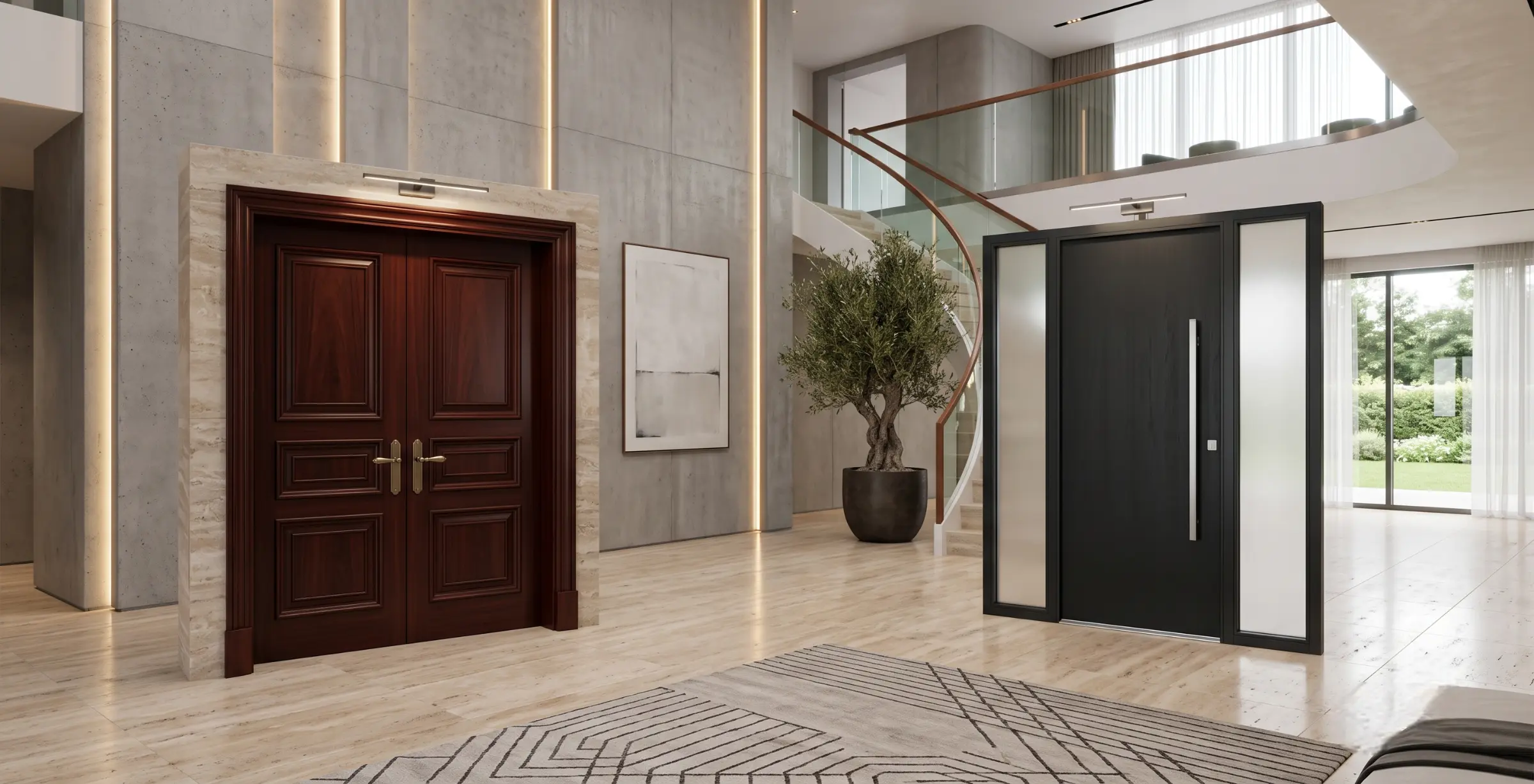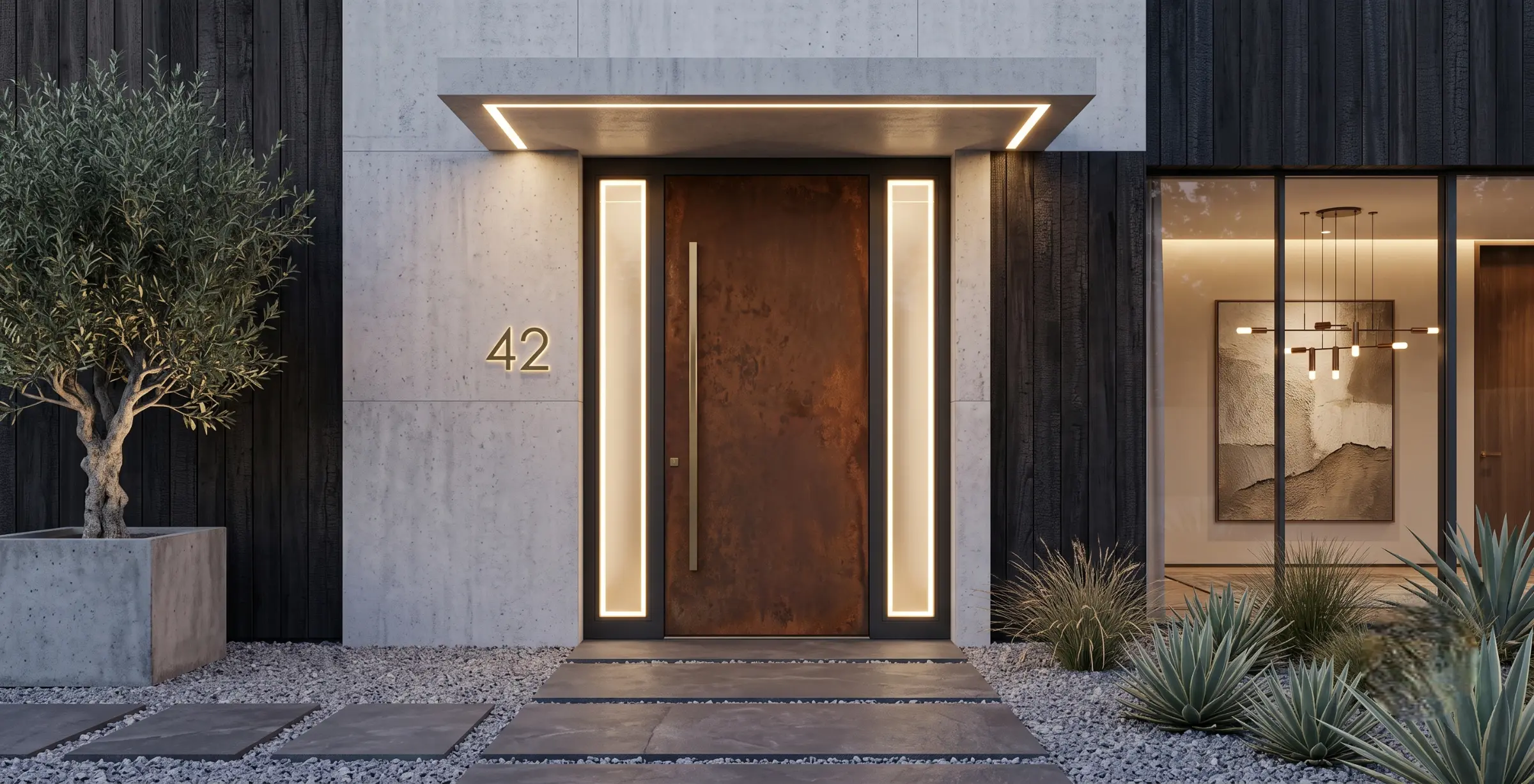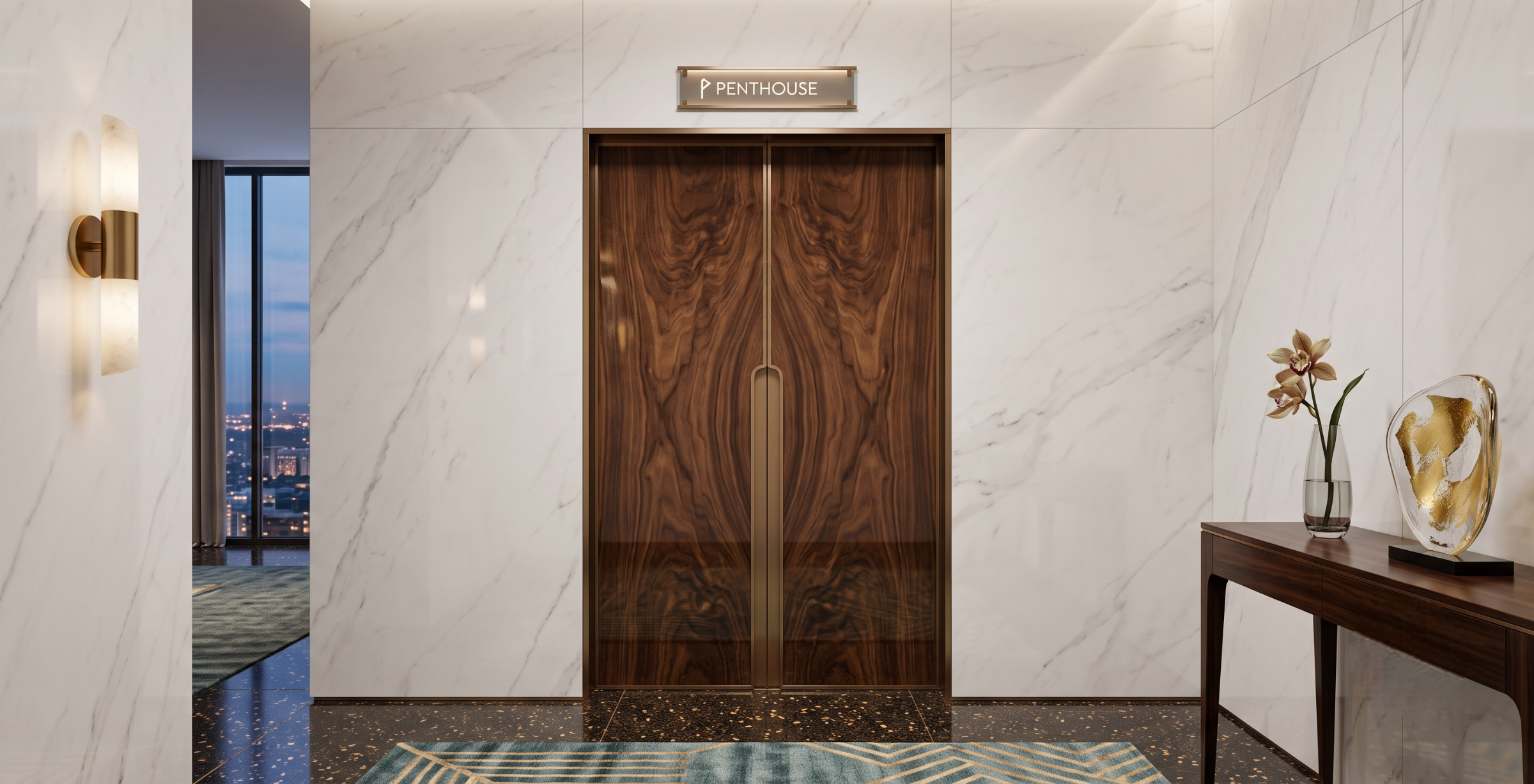
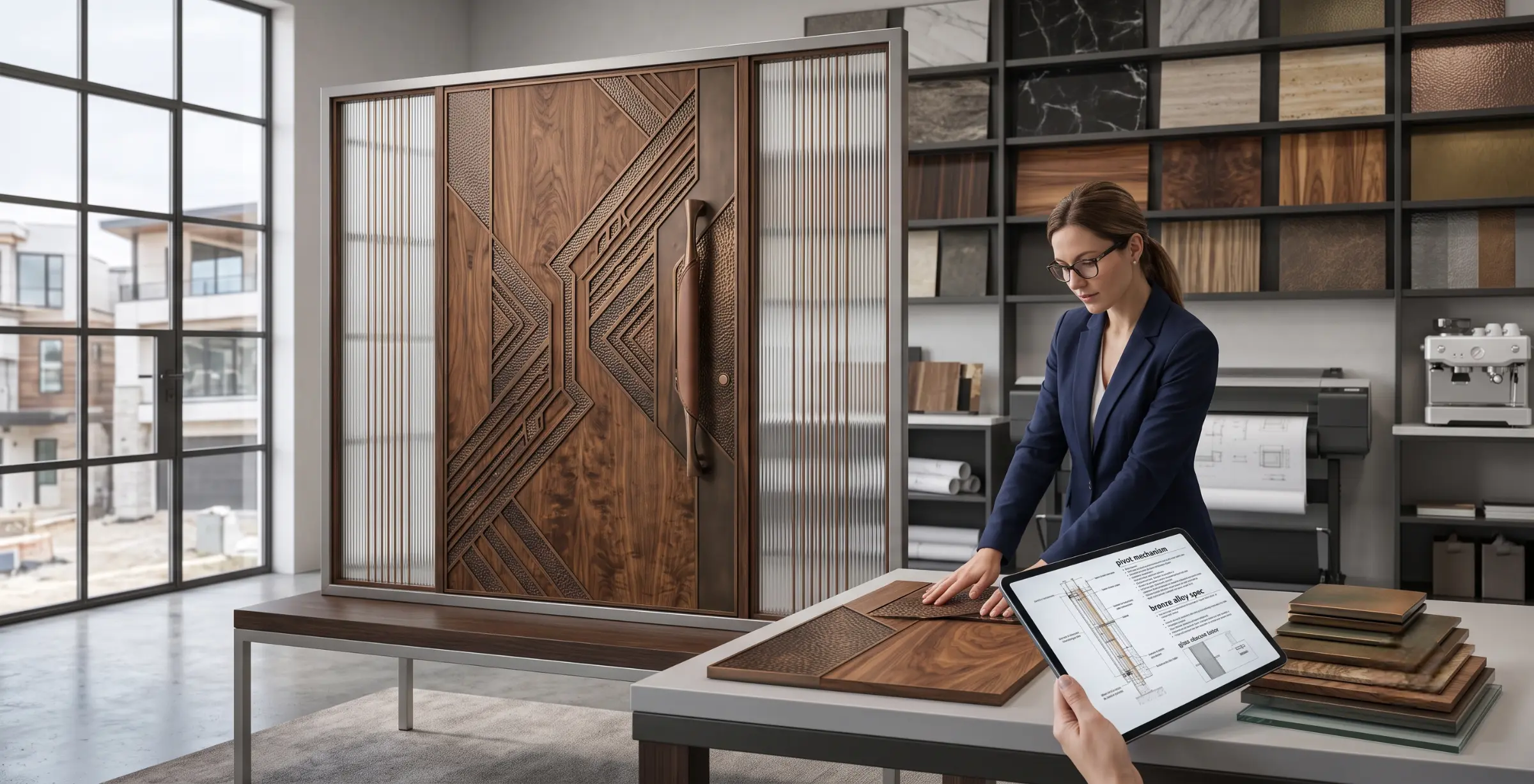
Architects should specify a luxury main door by defining material, finish, dimensions, and fabrication method early in the design phase, not as a fixtures-and-fittings afterthought. A luxury main door design needs its own spec sheet covering substrate, coating process, hardware integration, and lead time, because custom fabricators like Fabrinox build to order and cannot be substituted in at the last stage of a project without compromising the design intent.
Most specification failures on a residential entrance don't happen because the architect picked the wrong door. They happen because the door was specified too late, treated as a procurement line item instead of an architectural element, and handed off without enough detail for a fabricator to actually build what was drawn. The result is a client-approved rendering that doesn't match what gets installed.
This is a practical breakdown of how to specify a luxury door correctly, from early design through fabrication, and where a custom metal fabricator like Fabrinox fits into that process.
When Should the Main Door Be Specified in a Residential Project?
Specify the main door during schematic design, not during finishes selection near the end of the project. A luxury entrance door, particularly a custom metal or PVD-coated design, typically has a lead time of eight to sixteen weeks once fabrication begins, and that timeline doesn't include design revisions, material sourcing, or on-site measurement confirmation.
Specifying late creates three recurring problems on residential projects:
Structural conflicts. Oversized or pivot doors often require a reinforced frame and floor-mounted pivot hardware that needs to be coordinated with the structural engineer before the opening is framed, not after.
Budget mismatch. Custom fabrication costs vary significantly by material and finish. A client who approved a rendering without knowing the fabrication cost behind it will push back late in the project, when changes are most expensive.
Design compromise. If the opening is framed to a standard size before the door is finalized, the architect loses the option of specifying an oversized or pivot entrance door design, which is one of the defining features of contemporary luxury residential entrances.
What Information Does a Door Specification Need to Include?
A complete luxury main door design specification needs to answer five questions clearly enough that a fabricator can quote and build from it without back-and-forth clarification:
Material and substrate. Stainless steel grade (304 or 316 for coastal projects), solid wood species, or a hybrid wood-faced metal core.
Finish and coating process. PVD coating color and process, powder coating, brushed or etched texture, or a bonded wood veneer.
Dimensions and opening type. Standard hinged, oversized hinged, or pivot, including the exact aperture width and whether the design exceeds the standard 900mm residential doorway.
Hardware integration. Whether locks, pivots, and any smart access hardware are concealed, and who supplies them, the fabricator or a separate hardware vendor.
Lead time and site tolerances. Fabrication timeline against the project schedule, plus allowable tolerance for on-site framing so the door fits without rework.
Leaving any of these open at the specification stage is what pushes decisions into the field, where they're harder and more expensive to correct.
Should Architects Specify Standard or Custom-Fabricated Doors for Luxury Residential Projects?
For genuinely luxury residential work, custom fabrication is almost always the right call over a standard catalog door, because standard doors cap what's achievable on finish, scale, and material combination. A catalog steel door comes in fixed sizes and a limited finish range. A custom fabricator builds to the architect's drawing, which means the opening width, the coating finish, and the hardware integration can all be designed around the facade instead of the facade being designed around what a catalog offers.
This is where a fabricator like Fabrinox becomes a design partner rather than a supplier. Fabrinox builds stainless steel, copper, and aluminium doors to order, with PVD coating, powder coating, or etched wood-grain and leather-texture finishes applied specifically to the project. For an architect, that means the entrance door design isn't limited to what's in stock; it's built to match the material palette of the rest of the facade, whether that's a bronze PVD finish matching window frames or a textured surface matching an adjacent stone or timber cladding.
Practical note for specification documents: when specifying a custom fabricator, include the finish sample approval step explicitly in the project timeline. PVD and etched finishes vary enough between fabricators that a physical sample should be approved before full fabrication begins, not assumed from a photo.
How Does Material Choice Affect the Luxury Main Door Specification?
Material choice affects structural requirements, hardware compatibility, and long-term maintenance obligations that should be documented in the spec, not left to the client to discover after handover.
Stainless steel supports the widest range of coating finishes and the largest door sizes without warping, making it the default for pivot and oversized entrance door design. It also has the lowest long-term maintenance obligation, which is worth noting in the spec for client-facing documentation.
Wood requires the architect to specify a maintenance schedule (resealing every one to three years, depending on climate) as part of the handover documentation, since unmaintained wood doors will fail the design intent within a few years.
Wood-faced metal lets the architect specify a steel core with a wood-textured or veneered face, keeping the structural benefits of steel while meeting a client brief that calls for a natural material look. This is a common resolution when a client wants wood aesthetics, but the project brief requires low maintenance or coastal-grade durability.
Specification Checklist for Architects
Before finalizing a luxury main door design specification, confirm the document includes:
Material and grade (steel, wood species, or hybrid)
Finish and coating process, with a physical sample approval step
Exact dimensions and opening type (hinged, oversized, or pivot)
Hardware integration and supplier responsibility
Fabrication lead time mapped against the project schedule
Maintenance requirements documented for client handover
If you're specifying a custom entrance for a residential project, connect with Fabrinox early in the design phase. They work directly from architectural drawings to produce fabrication-ready specifications, material samples, and lead-time estimates before the opening is framed.
Have a project in schematic design right now? Contact us today.
Frequently Asked Questions
What's the biggest mistake architects make when specifying a luxury main door? Treating the door as a fixtures-and-fittings selection instead of an architectural element specified in schematic design. This causes lead-time conflicts, structural coordination issues with oversized or pivot doors, and budget surprises late in the project.
Can a custom fabricator work directly from architectural drawings?
Yes. Custom fabricators typically work from the architect's drawings and specification sheet, then produce fabrication drawings and a finish sample for approval before full production. Providing complete material, finish, and dimension details upfront shortens this back-and-forth significantly.
Is a pivot door harder to specify than a standard hinged entrance door?
Yes, because pivot hardware needs to be coordinated with the structural engineer and often requires floor-mounted hardware planned before the opening is framed. This coordination should happen during schematic design, not after the structure is built.
How early should a fabricator be brought into a residential project?
As soon as the door is being treated as a design element rather than a placeholder, typically during schematic design or early design development. This gives enough lead time for fabrication (often eight to sixteen weeks) and allows structural coordination for custom sizing or pivot hardware before the opening is framed.