Quick answer: Stainless steel and PVD-coated metal are the best materials for modern entrance door design because they resist warping, corrosion, and fading with almost no maintenance. Solid wood offers the most natural warmth but needs regular resealing. Wood-faced metal and aluminum-glass doors are the best middle-ground options depending on climate and architectural style.
Most homeowners pick a front door the same way they pick a paint color: by scrolling for twenty minutes and pointing at whatever looks good. Then the door warps in year three, the finish dulls, or the lock stops sitting flush because the hinge side has swollen with moisture. The material was wrong for the climate, the traffic, or the look they actually wanted long term.
Material is the decision that everything else in modern entrance door design sits on top of. Below is a direct breakdown of each material, where it wins, where it fails, and why Fabrinox has become one of the go-to names for homeowners and architects who want a luxury main door design built to last rather than repainted every few years.
What Is the Best Material for a Modern Entrance Door?
Stainless steel is generally considered the best material for a modern entrance door. It resists corrosion, dents, and warping; holds a finish for decades without repainting; and supports advanced coatings like PVD that other materials cannot take. For homes prioritizing natural texture over pure durability, solid wood remains the top alternative, provided the owner budgets for maintenance.
The five materials worth comparing for modern entrance doors are:
Stainless steel: best overall durability and low maintenance
Solid wood: best natural warmth, highest upkeep
Wood-faced metal: best combination of both
Aluminum and glass: best for light-filled, minimalist facades
PVD-coated metal: best for a luxury, statement-making finish
Each is broken down below.
Is Stainless Steel Good for Front Doors?
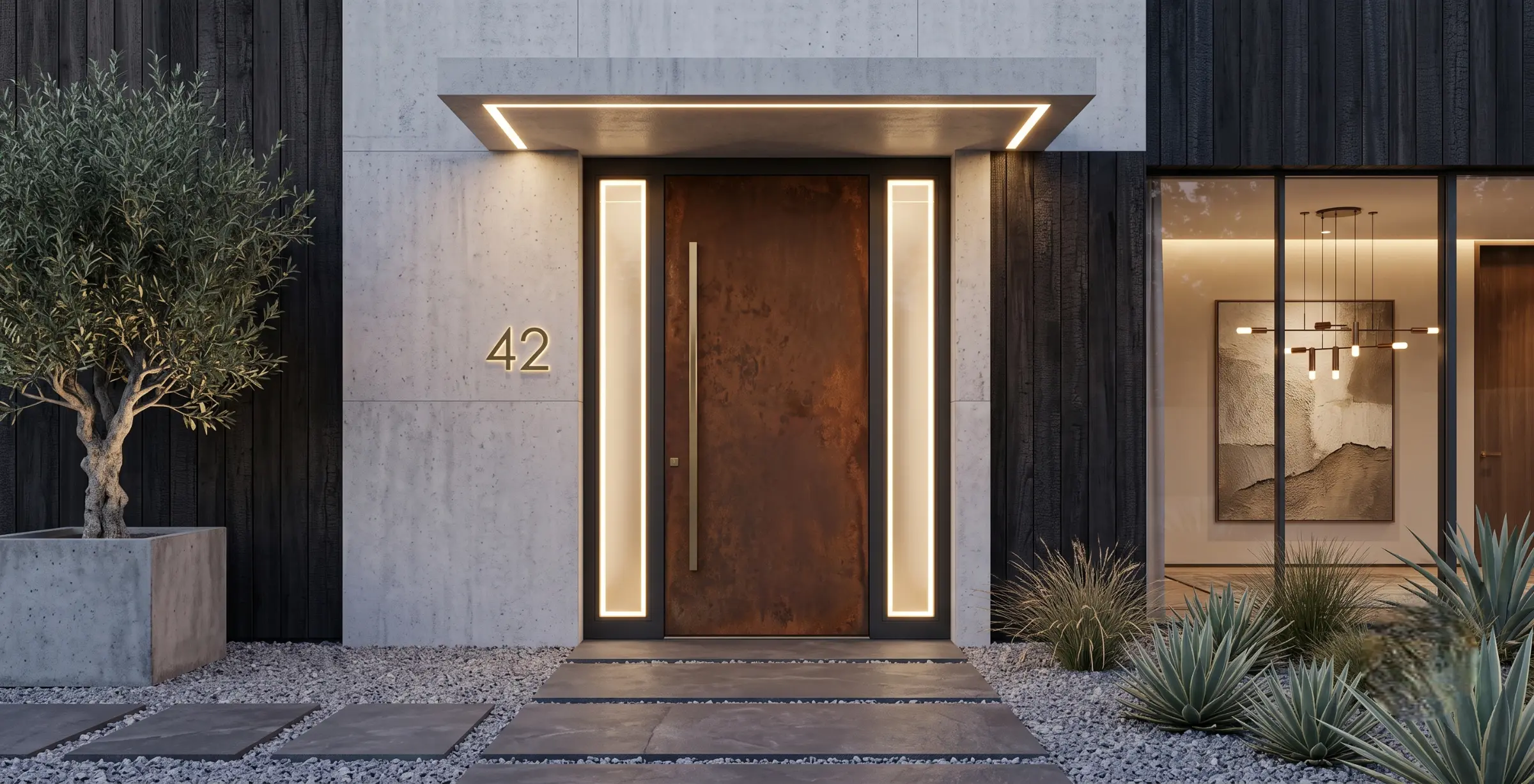
Yes. Stainless steel is one of the strongest materials available for front doors, and it's increasingly the standard choice for luxury main door design in both new builds and renovations. A properly fabricated stainless steel door (304 or 316 grade, depending on coastal exposure) does not rot, does not need repainting, and does not expand or contract enough to affect its seal.
Steel has also become the default choice for oversized pivot doors, a major 2026 design trend. Standard door apertures used to sit around 900mm; many luxury builds now widen that to 1.2 meters or more, and wood isn't structurally practical at that scale without a steel core.
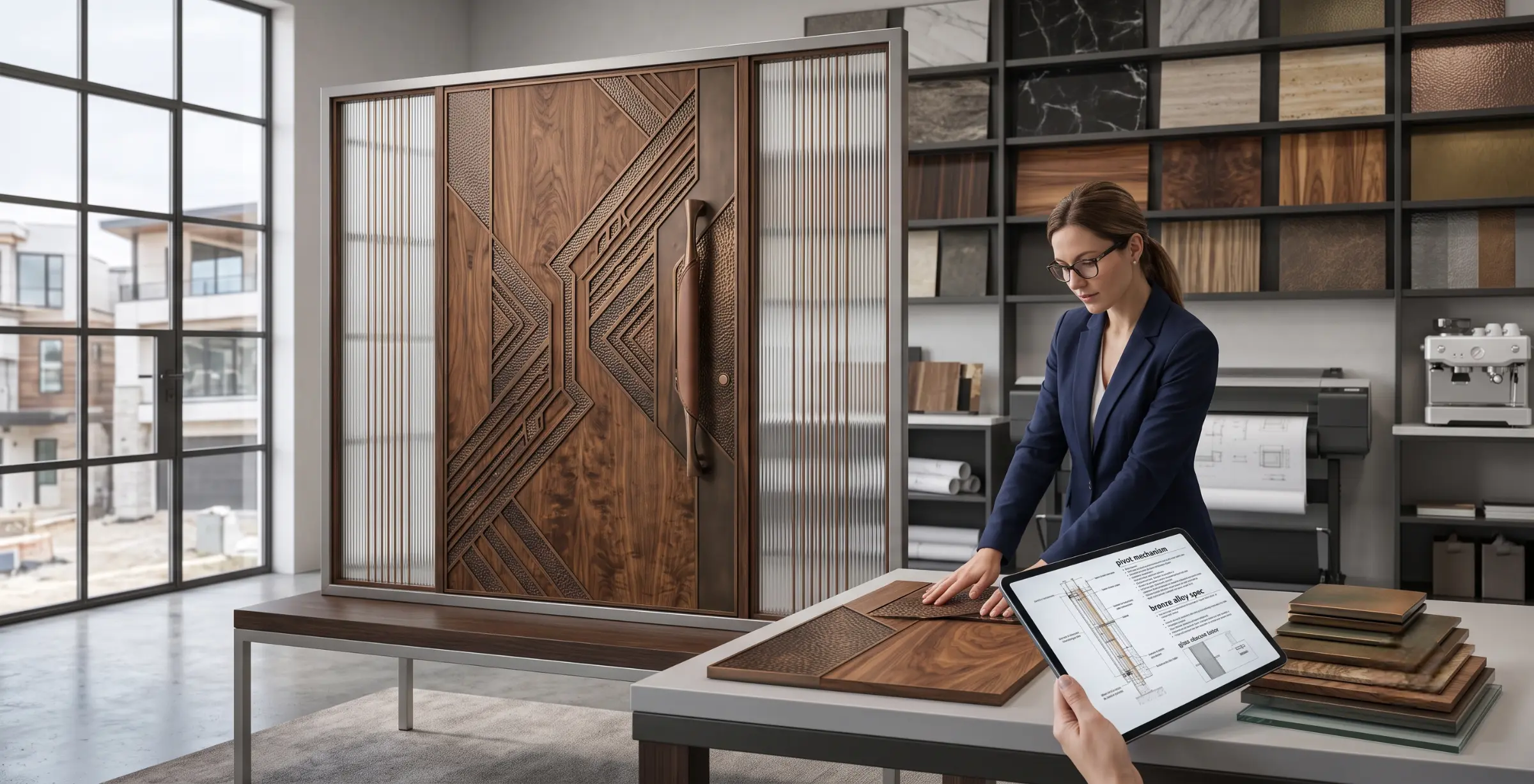
The old objection to steel was that it looked cold or industrial. That's outdated. Fabrication houses now apply PVD coatings in titanium gold, bronze, and gunmetal tones, or etch the surface to read as leather, wood grain, or brushed stone. This is exactly where Fabrinox operates: every stainless and copper door is custom fabricated in-house and run through PVD coating, powder coating, and etching processes so the finished door reads as warm and bespoke rather than industrial.
Watch for: PVD coating quality varies significantly between fabricators, which is why the process matters as much as the material. A poorly applied coating flakes or discolors unevenly within a few years. Fabrinox's in-house PVD process is built specifically to avoid that failure point, so if you're comparing fabricators, ask to see the coating process before you commit to anyone.
Is Wood or Metal Better for a Luxury Main Door Design?
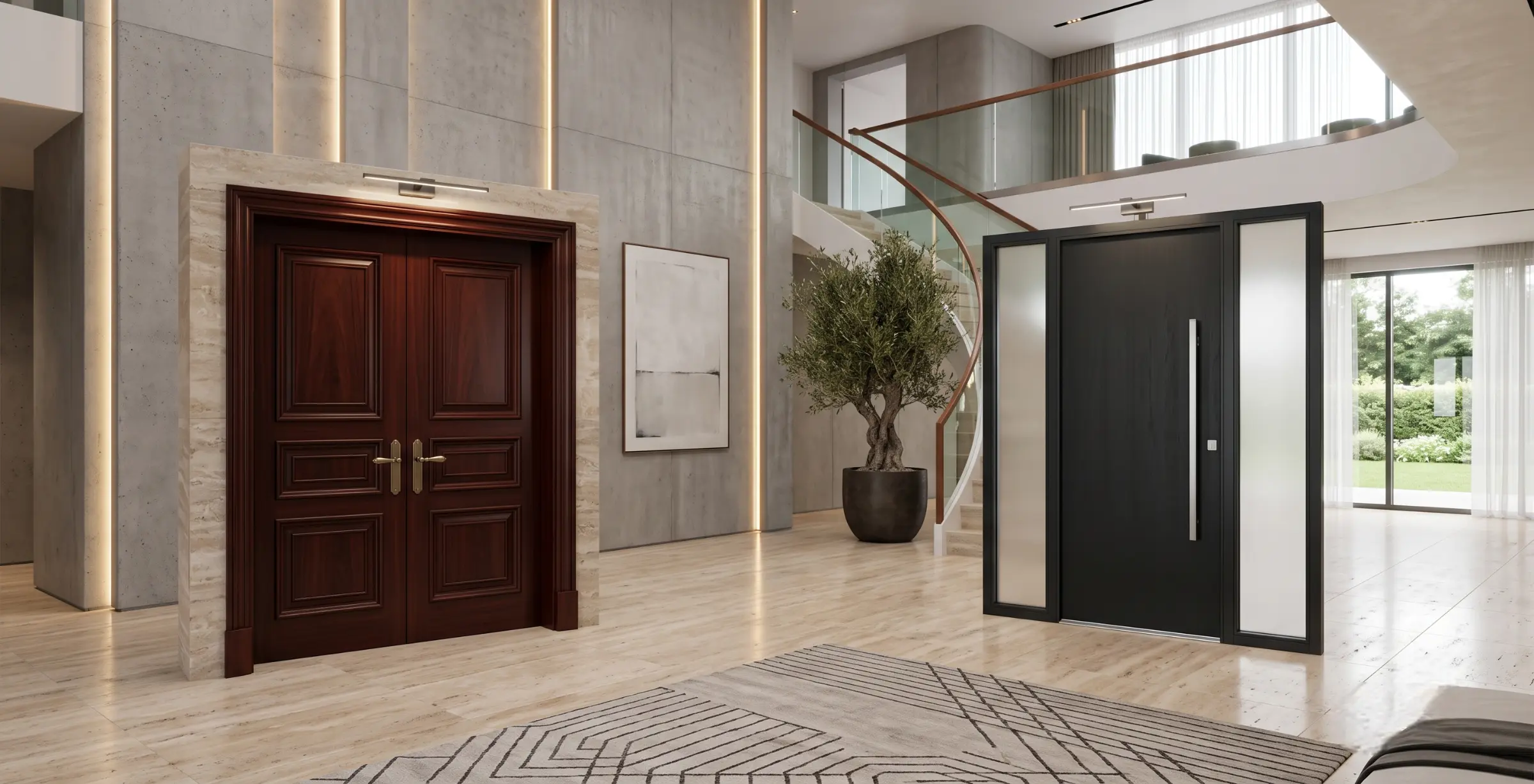
It depends on the priority. Metal, specifically finished stainless steel, wins on durability and low maintenance. Wood wins on natural texture and warmth. Neither is universally "better"; the right choice depends on climate, architectural style, and how much upkeep the owner is willing to commit to long term.
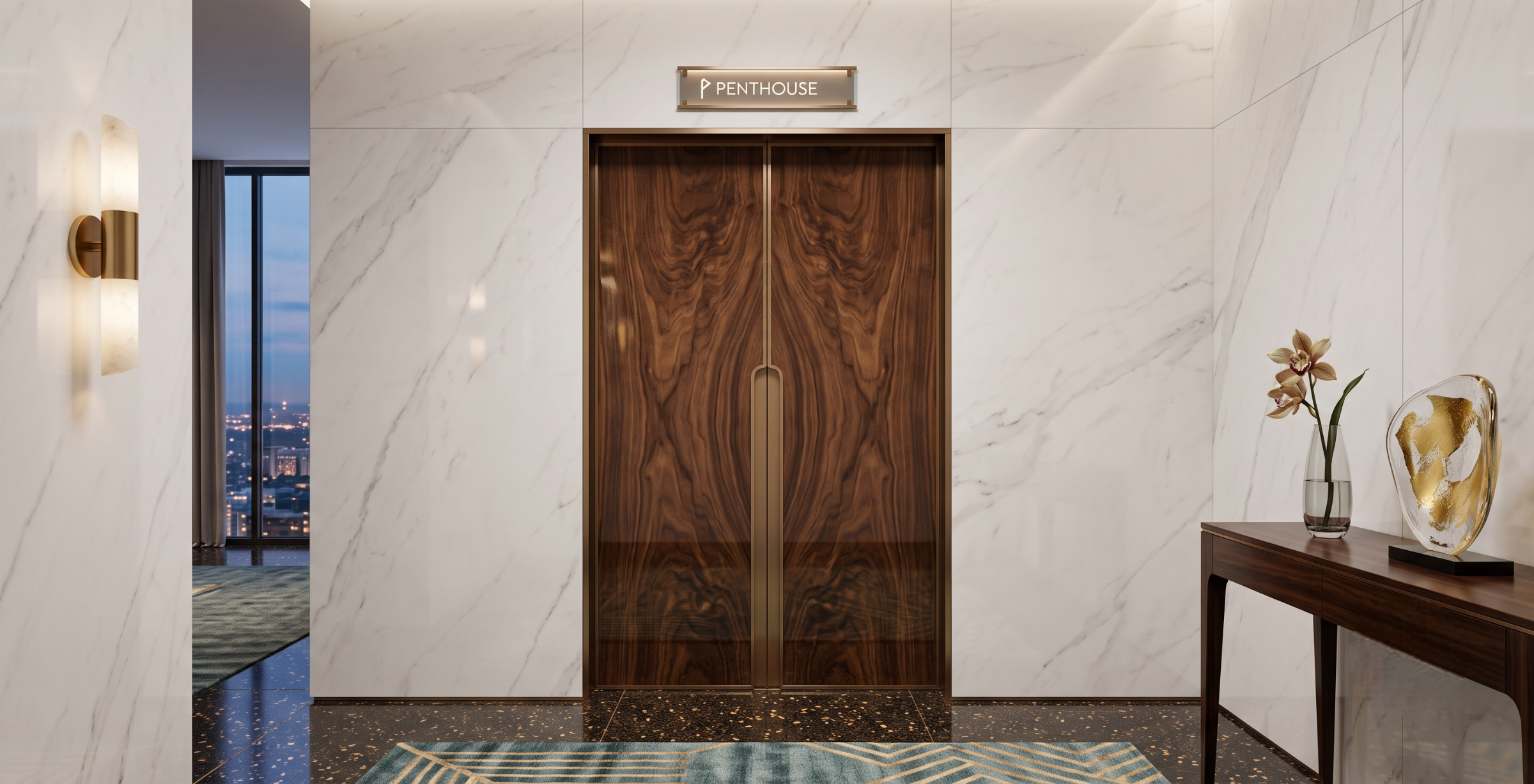
Solid wood doors (teak, walnut, oak) still offer a handcrafted look that fabricated materials can't fully replicate. For traditional or transitional facades, wood is usually still the right call over raw metal.
The trade-off is maintenance, and it's not minor. Solid wood doors typically need resealing every one to three years depending on sun exposure and humidity. A door facing direct afternoon sun in a hot climate will show UV fading and hairline cracking faster than most buyers expect. In coastal or high-humidity regions, budget for that upkeep honestly, or pair wood with a steel frame that takes the structural load instead.
Can You Get a Wood-Look Front Door Without Wood's Maintenance?
Yes, through wood-faced or wood-textured metal doors, and this is one of the areas Fabrinox specializes in directly. The door's structural core and frame are steel, but the outer face is either real wood veneer bonded to the metal, or a wood-grain finish applied through etching and texturing. Fabrinox produces the latter on stainless steel, so the surface pattern doesn't lift, peel, or fade the way a bonded veneer eventually can, and each finish is customized to match the home rather than pulled from a generic catalog.
This gives steel's dimensional stability (no warping across seasons) with a surface that reads as wood from a few feet away. It's a practical option for anyone renovating a traditionally styled home who still wants a low-maintenance door, and it's a common starting point for clients who come to Fabrinox undecided between wood and metal.
What Door Material Works Best for Glass or Minimalist Facades?
Aluminum-framed doors with large glass panels are the best fit for homes with glass facades and open interiors, where a heavy solid door would fight the architecture. Aluminum won't rust and needs almost no upkeep. The 2026 shift toward textured glass, reeded, frosted, or smoked, solves the old privacy complaint without blocking natural light entirely.
Watch for: Aluminum-glass doors are not the strongest option for forced-entry resistance on their own. If security is a priority, pair the door with a reinforced frame and a multi-point locking system rather than relying on the glass and frame alone.
What Is PVD Coating and Why Is It Used on Luxury Doors?
PVD, short for Physical Vapor Deposition, is a coating process that bonds a metal finish to a door's surface at a molecular level inside a vacuum chamber. Unlike paint or standard powder coating, PVD does not chip, peel, or fade under UV exposure, and it typically holds its finish for well over a decade without recoating.
This is the process behind most high-end statement doors: deep bronze, brushed gunmetal, titanium gold. It's also the core of what Fabrinox does. Every PVD stainless and copper door Fabrinox produces is custom fabricated for the specific project, not selected from a size chart, which is why their doors tend to become the architectural focal point of the facade rather than just an access point. If you're set on a PVD-finished entrance, this is the finish and the fabrication process worth asking about by name.
Bottom Line: Which Door Should You Actually Choose?
For the lowest long-term cost and maintenance, steel wins. For natural texture and warmth, wood wins, provided the upkeep is budgeted for honestly. For buyers who want both, a wood-faced or PVD-textured metal door is the option most people don't realize exists until they start comparing materials directly, and it's the space Fabrinox has built its entire business around.
Treat the entrance door as structural and architectural, not decorative. It carries more visual and physical weight than almost anything else on the front of the house, and it's not a decision worth making from a catalogue photo.
If you're planning a new build or a renovation and want a door that's custom-fabricated for your entrance rather than resized from a standard template, talk to the Fabrinox design team about your project. They'll walk you through material options, coating finishes, and timelines based on your specific facade, climate, and budget.
Ready to see what a custom Fabrinox door looks like for your home?