Quick answer: A symmetrical double door has two matching panels of equal width that open together or independently, giving a balanced, formal look. An asymmetrical double door pairs one wide active panel with a narrower fixed or occasionally-used panel, giving a more contemporary, functional look. The choice mostly comes down to how the door will actually be used day to day, not just how it looks in a photo.
If you've ever stood in front of a grand double door and wondered why one side looks slightly narrower than the other, that wasn't a mistake. It was a deliberate choice, and it's one of the first decisions that shapes how a double door will feel and function once it's actually installed. Homeowners planning main double door designs for home projects usually discover this distinction late, after they've already fallen in love with a photo, so it's worth understanding early.
What Is a Symmetrical Double Door?
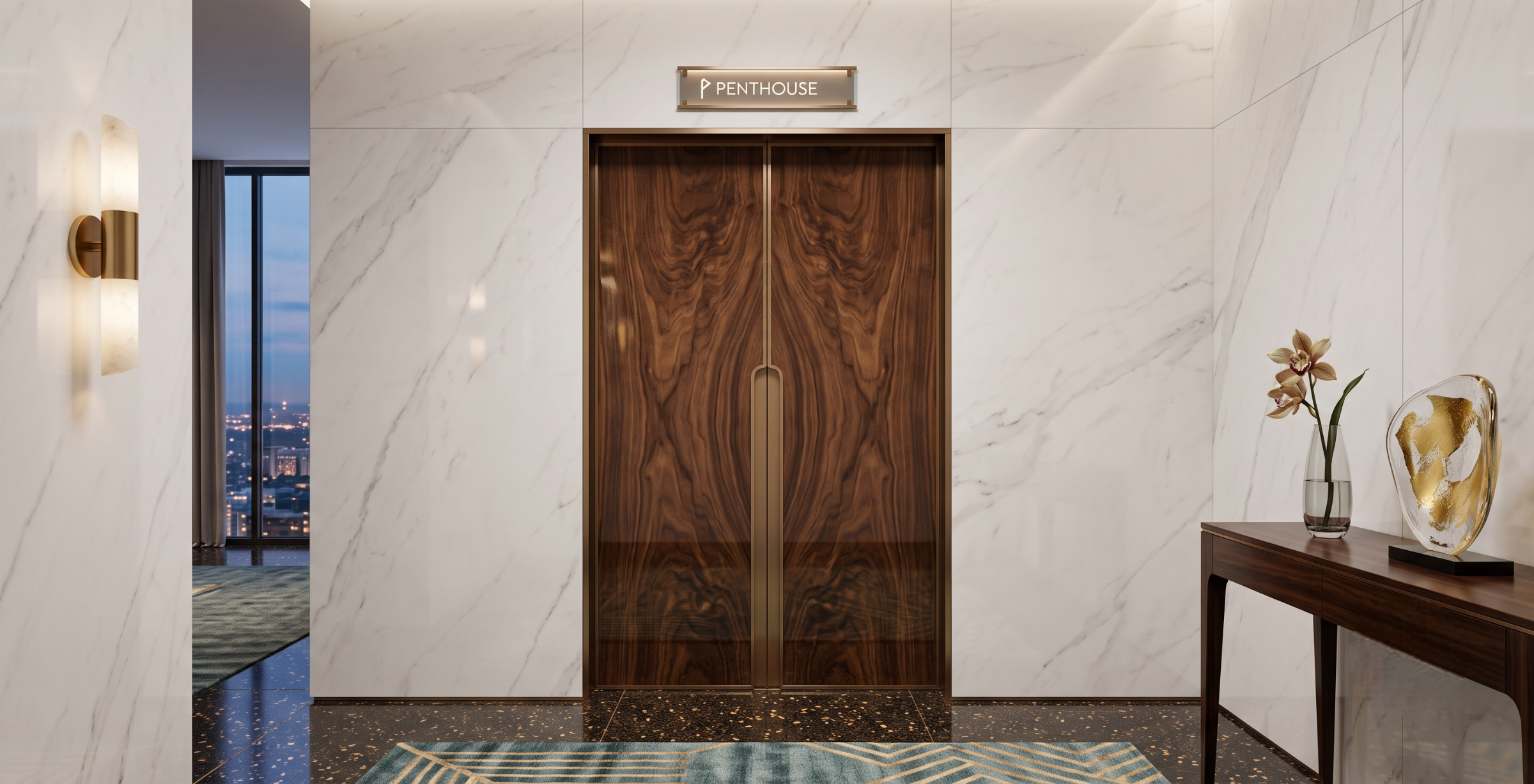
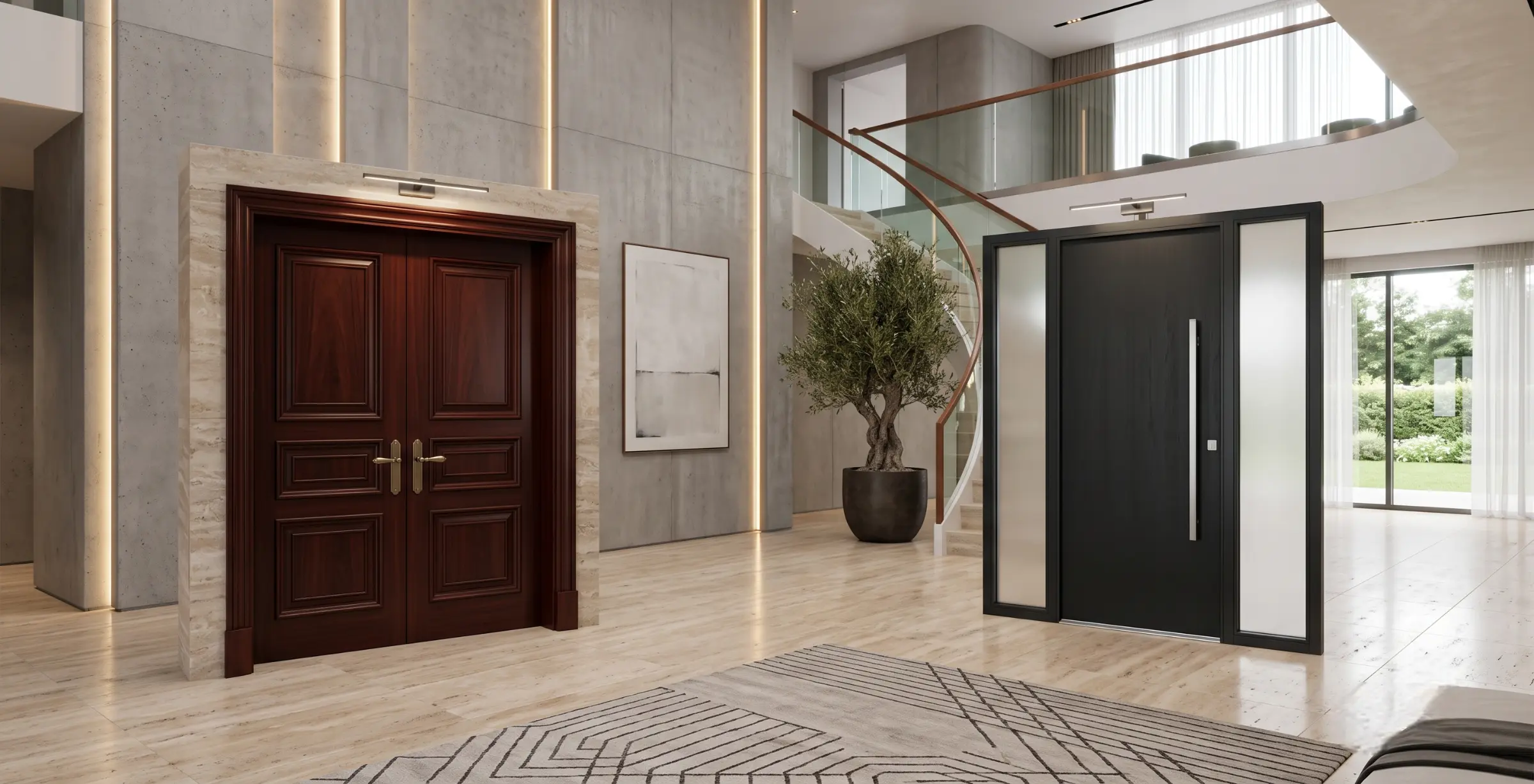
A symmetrical double door has two panels of identical width, height, and design, mounted side by side so the entrance reads as one balanced, mirrored composition. Both panels typically open, either together for a grand entrance moment or independently for everyday use through just one side.
This is the classic choice for formal facades, colonial-style homes, and entrances designed to make a strong architectural statement. The symmetry itself is the visual payoff. Walk up to it and the eye naturally centers, which is exactly why symmetrical layouts have stayed popular for double door front door designs on larger homes with a defined, centered entrance axis.
The trade-off is practicality. Because both panels are usually the same width, opening just one side for daily use, letting a delivery in, walking the dog, greeting a guest, means squeezing through a narrower gap than you'd get with an asymmetrical layout. Most households use both panels only for special occasions and one panel almost exclusively otherwise.
What Is an Asymmetrical Double Door?
An asymmetrical double door pairs one wider panel, which functions as the primary door used for daily entry, with a second, narrower panel that stays closed most of the time and opens only occasionally, for large furniture, big gatherings, or simply for visual effect. The two panels can still share a matching finish and design language; the difference is proportion, not style.
This layout has become increasingly common in contemporary homes because it solves the everyday-use problem symmetry creates. The wider active panel gives comfortable daily clearance, wide enough to carry groceries through without turning sideways, while the narrower second panel still delivers the visual impact of a double door entrance when both sides are open.
Architecturally, asymmetry also gives more flexibility. A narrower fixed panel can house a sidelight-style glass insert, a different texture, or a contrasting finish without disrupting the proportions of the main door, something much harder to pull off cleanly on a fully symmetrical layout.
Symmetrical vs Asymmetrical: Which Should You Choose?
The honest answer depends on how the entrance will actually be used, not just which one looks better on paper.
Choose symmetrical if: the entrance is primarily ceremonial or the home's architecture is already formal and centered, and daily foot traffic isn't a major concern.
Choose asymmetrical if: the door will see regular daily use and you want the full double-door visual impact without sacrificing everyday convenience.
Many homeowners planning main double door designs for home builds assume symmetry is automatically more luxurious. It isn't. Asymmetrical layouts are just as common in high-end residential work, and in many cases they're the more thoughtful choice because they were designed around how people actually move through the entrance.
Does Material Choice Change Which Layout Works Best?
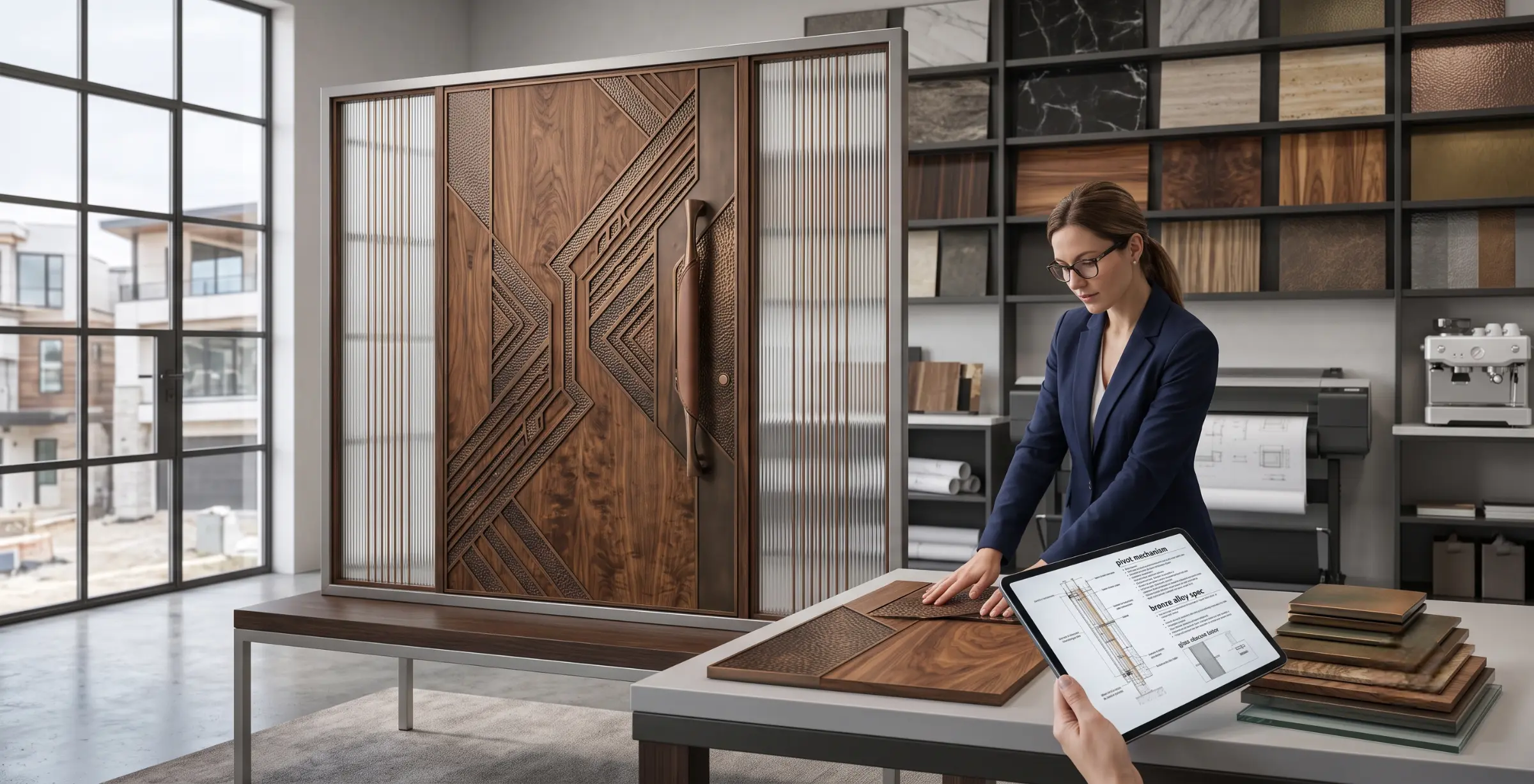
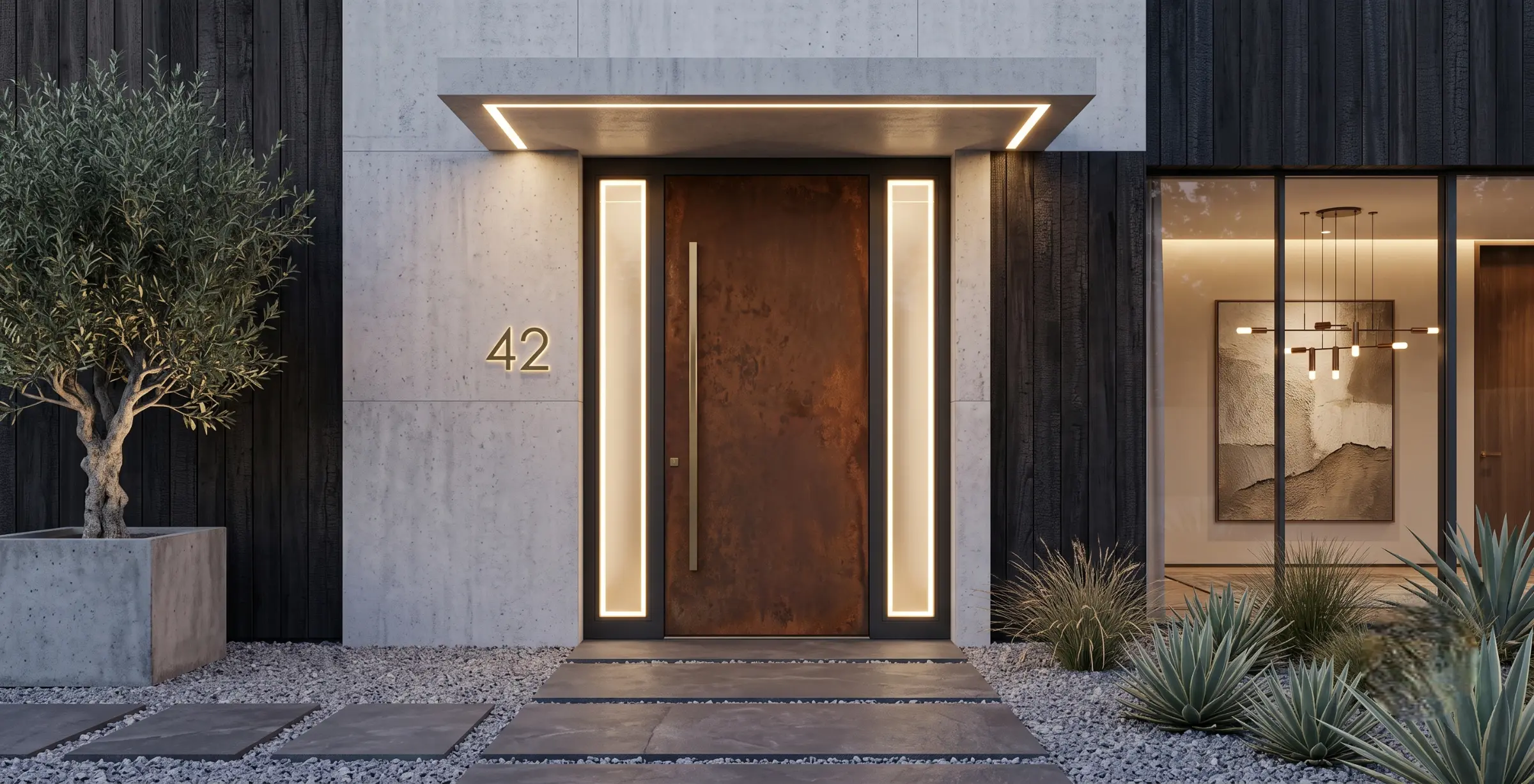
Yes, and this is where much of the visual difference between symmetrical and asymmetrical doors comes from. Solid panels in a heavier material read very differently depending on proportion. A pair of matching solid wood panels leans traditional and formal. A wide-and-narrow pairing in a metal finish, brushed steel, or a rich copper door surface tends to read as more contemporary and intentional, because the asymmetry itself suggests the design was custom-built around the entrance rather than pulled from a standard size chart.
Copper in particular has become a favorite for this kind of pairing. It develops a natural patina over time, so the two panels age together with a warmth painted or powder-coated finishes can't replicate, and it takes well to the etched or textured detailing that makes an asymmetrical pair feel deliberate rather than mismatched. This is the kind of custom work Fabrinox has built a name around, pairing panels of different widths in matching copper or steel finishes so the proportions feel designed rather than adjusted after the fact.
Can Both Panels Be Made to Match Perfectly in a Custom Door?
Yes, and this is one of the clearest advantages of going custom rather than choosing from a standard supplier's catalog. When both panels, wide or narrow, are fabricated as part of the same project, the grain, texture, finish, and hardware line up exactly, so the asymmetry reads as a design choice rather than as two mismatched doors placed next to each other.
This matters more than people expect. Much of the "off" feeling homeowners describe with asymmetrical double doors comes from panels sourced separately or resized from a standard product line, so the proportions or finishes don't sit quite right together. A door built as a single custom project, the kind of work Fabrinox does for residential entrances, avoids that problem entirely because both panels are designed and finished together from the start.
Frequently Asked Questions
Is a symmetrical or asymmetrical double door more expensive?
Cost depends more on material, finish, and fabrication method than on layout. A custom asymmetrical pair and a custom symmetrical pair in the same material and finish are usually close in price, since both require similar fabrication work.
Can an asymmetrical double door still look formal?
Yes. Formality comes mostly from material, finish, and detailing, not strictly from matching panel widths. A wide-and-narrow copper pair with a refined finish can look just as formal as a matching symmetrical pair, sometimes more so, because the proportions feel intentionally designed.
What's the most practical double door layout for daily use?
Asymmetrical layouts are generally more practical for daily use because the wider active panel gives comfortable clearance without needing to open both sides. Symmetrical doors work best when both panels are used regularly, or the entrance is more ceremonial than functional.
Does a copper door need more maintenance than a steel door?
Copper develops a natural patina over time rather than staying uniform, which some homeowners want, and others don't. It's a lower-maintenance material in that it doesn't need repainting, but the finish will visibly change with age unless sealed or coated to slow the process.
The Real Decision
Symmetrical and asymmetrical double doors aren't really a style debate. They're a use-case debate with a visual side effect. Think about how many times a day someone actually walks through that entrance before deciding which layout fits, then choose the material and finish that make the proportions feel intentional rather than adjusted. A door built as one custom piece, rather than assembled from two separately sourced panels, is usually what makes that intention actually show once it's installed.