Why does an elevator door in a five-star hotel look nothing like the one in a regular office building, even though both do exactly the same job? That's the question most people never think to ask, and it's exactly the problem architects have to solve on every luxury project.
Get it wrong, and the consequences show up fast. A door with a weak finish scratches within months of opening day. A generic stainless panel makes a million-dollar lobby feel like a mid-range apartment complex. A mismatch between the elevator door and the rest of the entrance finishes turns an otherwise polished space into something that looks stitched together. None of that is acceptable when a client is paying for a luxury experience, and none of it is easy to fix after installation.
So the real question isn't whether the elevator door matters; it clearly does. It's how architects go about specifying one that looks right on day one and still looks right five years later. That process involves more decisions, more coordination, and more specialized manufacturing knowledge than most people outside the industry ever realize.
Why the Elevator Door Carries So Much Weight?
Think about the sequence of a guest's experience. They walk in, they wait, they watch the doors, then they step through them. That waiting moment matters more than people realize. It's a few seconds of forced attention where there's genuinely nothing else to look at, which makes the door a captive-audience design opportunity most architects don't want to waste.
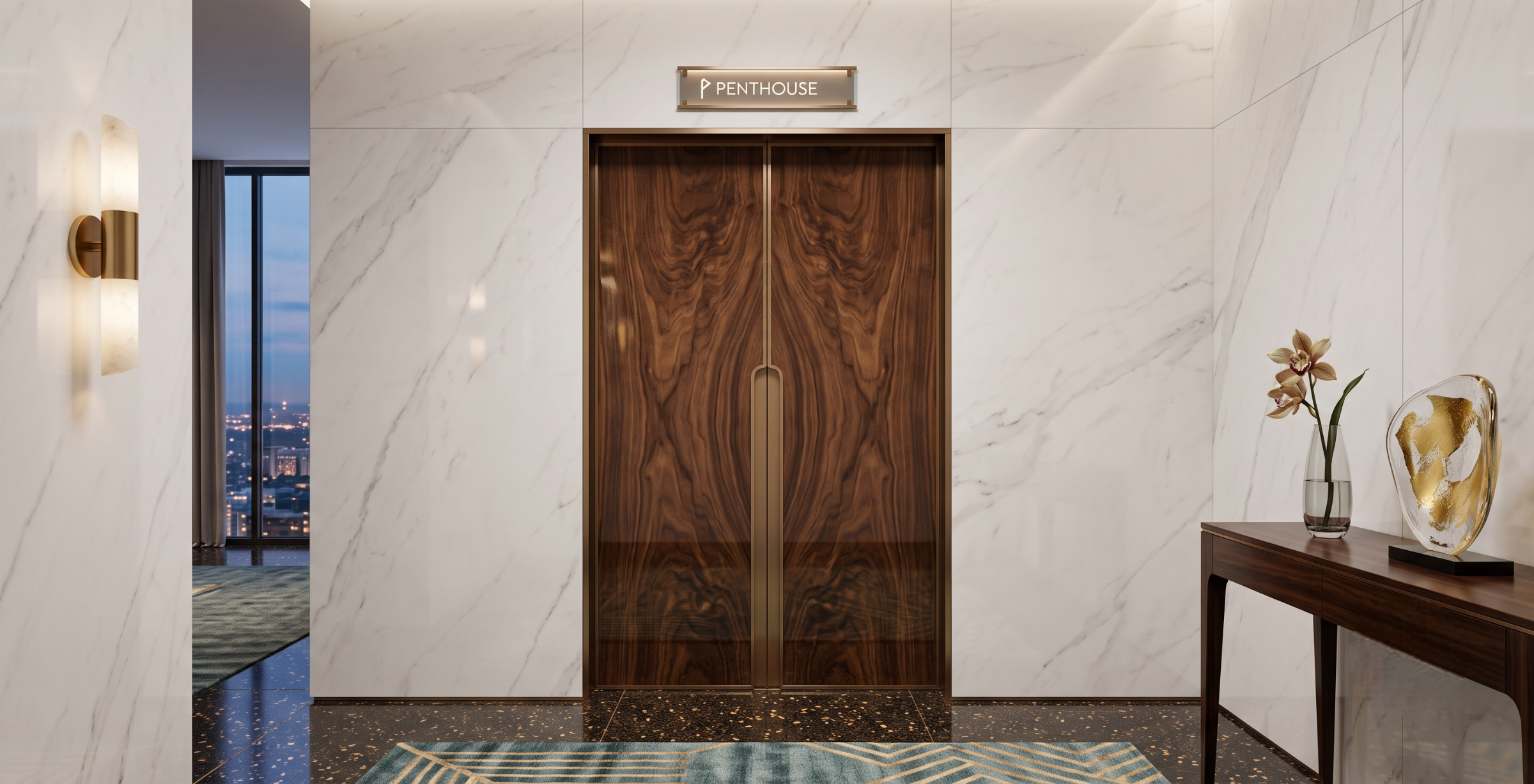
A dull stainless door with a brushed finish says "functional building." A door finished in a rich bronze PVD coating, or one carrying a subtle patina texture, says something entirely different. It signals the kind of luxury door treatment that tells a visitor, before they've even reached their room or office, what standard the rest of the building holds itself to.
What Architects Actually Consider When Specifying?
Specifying an elevator door for a luxury project involves more variables than most people expect. A few of the big ones:
Material and finish: Stainless steel remains the base material of choice for durability, but the finish, brushed, mirror, PVD-coated, or textured, changes the entire character of the door.
Corrosion and abrasion resistance: High-traffic buildings need doors that hold up to years of hands, luggage carts, and cleaning chemicals without looking worn within a couple of years.
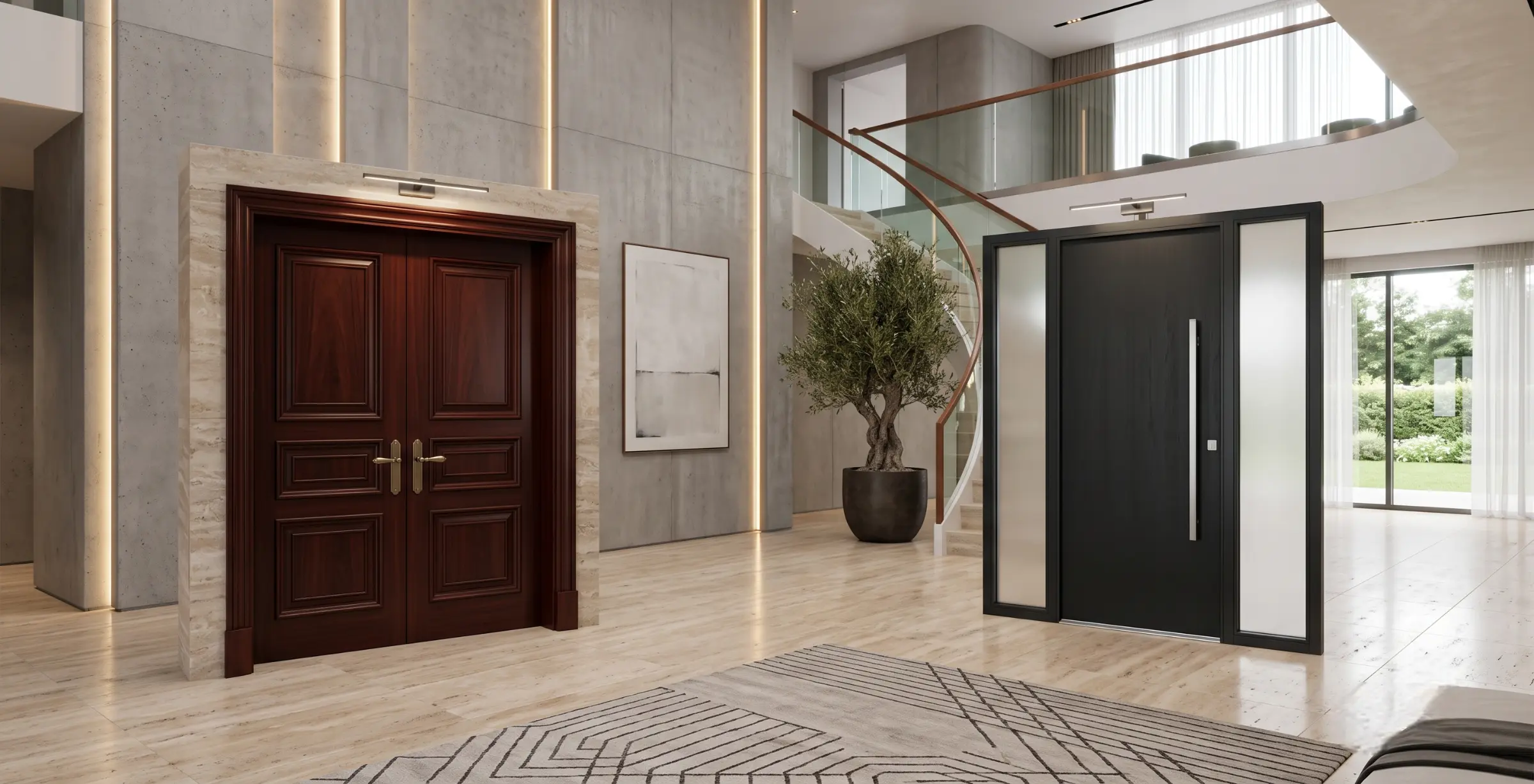
Coordination with the rest of the entrance door design: Elevator doors rarely exist in isolation. They need to visually connect with lobby paneling, reception desks, and other entrance door design elements so the space reads as one cohesive statement rather than mismatched pieces.
Custom detailing: Etching, engraving, or textured patterns that reflect a building's branding or architectural language.
Fire rating and code compliance: Luxury finishes still have to meet the same safety codes as anywhere else, which limits some material choices and pushes architects toward manufacturers who understand both aesthetics and compliance.
Getting all of these right at once is harder than it sounds, which is exactly why architects tend to work with specialized manufacturers rather than generic suppliers for anything above a standard commercial build.
Why Finish Choice Has Become Its Own Discipline?
Ten or fifteen years ago, elevator door finishes were fairly limited: brushed steel, maybe a mirror polish if the budget allowed. That's changed considerably. Prestige projects now demand finishes that do two things simultaneously: look distinctive and hold up under constant use.
This is where techniques like PVD coating have become essential. Physical Vapour Deposition creates a finish that's both visually rich, deep golds, bronzes, blacks, and far more resistant to scratching and tarnishing than traditional plating methods. For a door that gets touched dozens of times a day, that resistance isn't a luxury feature; it's practically a requirement.
Beyond PVD, architects are increasingly specifying stainless steel with wood-grain textures, leather-effect surfaces, and even marble-look finishes on metal doors, giving designers material options that were previously locked to their traditional counterparts but now come with metal's durability built in.
Where FABRINOX Fits Into This Process
This is precisely the space FABRINOX operates in. With 40 years of experience in metalwork, the company has spent decades refining exactly the kind of finishes architects now demand for high-end elevator installations.
FABRINOX manufactures international-quality PVD-coated sheets, pipes, and furniture, along with an extensive range of finishes, including advanced paint systems, powder coating, and patina effects. For projects that want stainless steel to mimic wood, leather, or marble without sacrificing the material's strength, this is exactly the kind of specialized craftsmanship that separates a forgettable lobby from a memorable one.
What makes FABRINOX particularly relevant to architects specifying elevator doors is the breadth of what they handle beyond doors alone. Their product range extends into furniture, sculptures, and partitions, meaning an architect can source a coordinated luxury door, matching partition, and custom furniture piece from a single manufacturer instead of stitching together finishes from multiple vendors and hoping they align.
That consistency matters enormously in luxury projects, where even a slight mismatch in metal tone between an elevator door and an adjacent partition can undercut an otherwise well-designed space.
Custom Solutions, Not Just Standard Catalogs
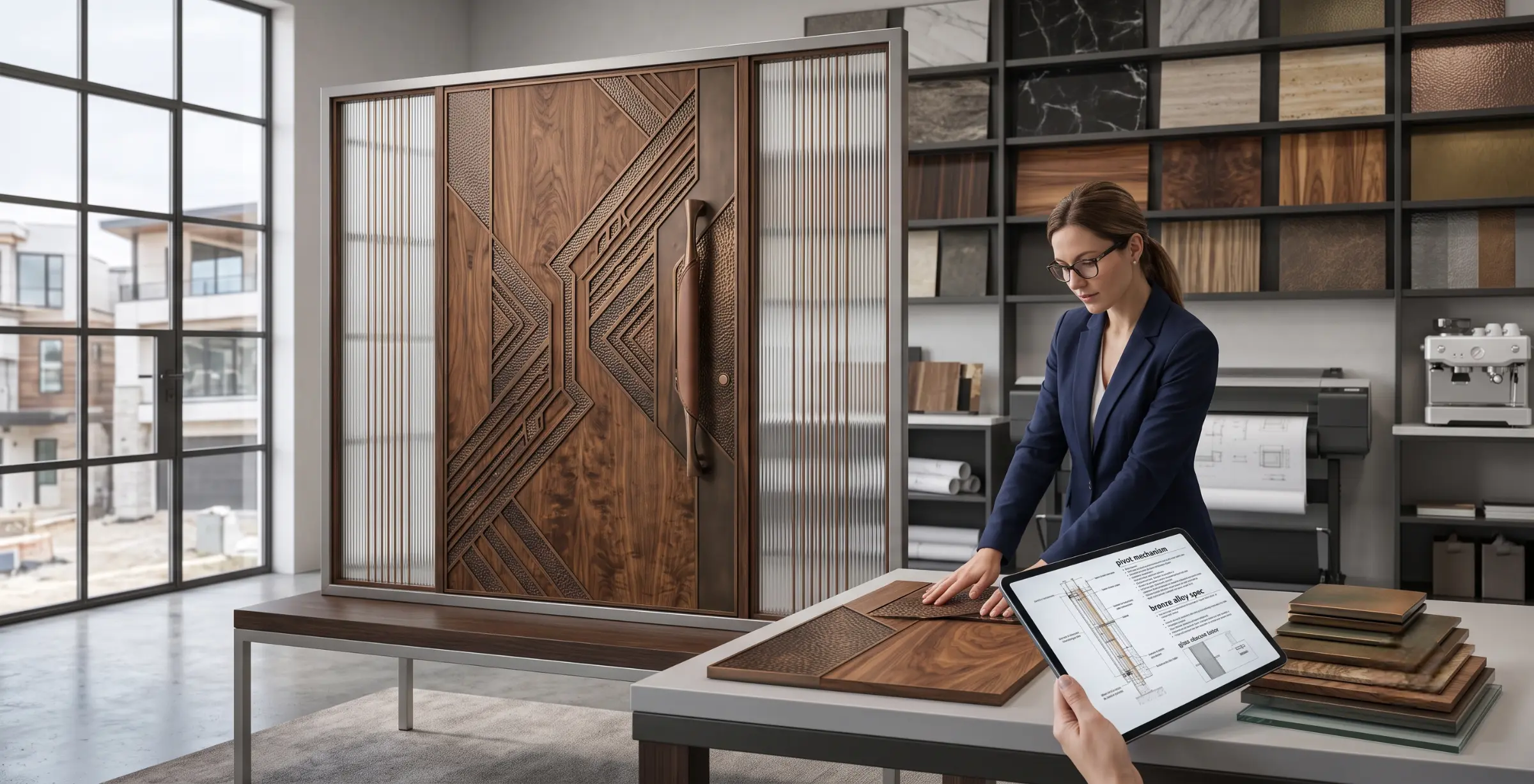
One thing that distinguishes a manufacturer worth specifying for a luxury project is willingness to build custom, not just pull from a catalog. FABRINOX's approach to combining metal and wood, along with their custom door, sculpture, and partition work, gives architects room to design something specific to a project rather than settling for whatever finish happens to be in stock.
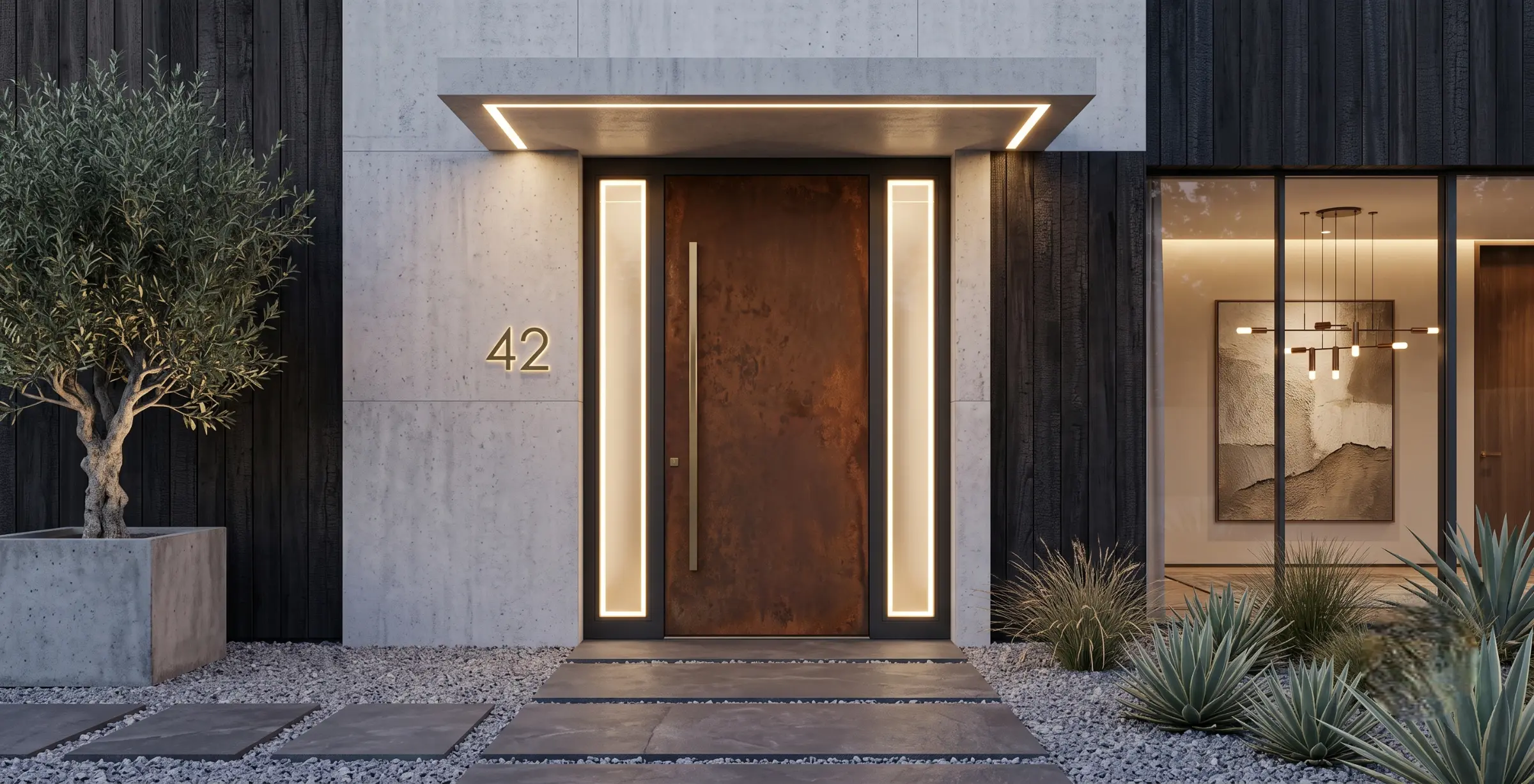
This flexibility becomes especially important in entrance door design, where the elevator doors, main entrance, and interior partitions often need to share a visual language even though they're structurally very different elements. A manufacturer capable of executing that consistency across material types, rather than specializing narrowly in just doors or just furniture, makes an architect's job considerably easier.
The Bottom Line for Architects
Specifying an elevator door for a luxury project isn't a late-stage decision, and it shouldn't be treated as one. It's a design choice that shapes first impressions, needs to withstand relentless daily use, and has to align visually with everything else in the space. Getting it right requires working with a manufacturer who understands both the craftsmanship and the practical demands involved.
With four decades of experience crafting excellence in metalwork, FABRINOX has built exactly that kind of expertise, spanning metal surfaces, doors, furniture, partitions, and sculptures, all designed to elevate a space with both strength and style. For architects looking to get an elevator door, a luxury door, or any element of entrance door design right the first time, that's the kind of partner worth having on the project from day one.