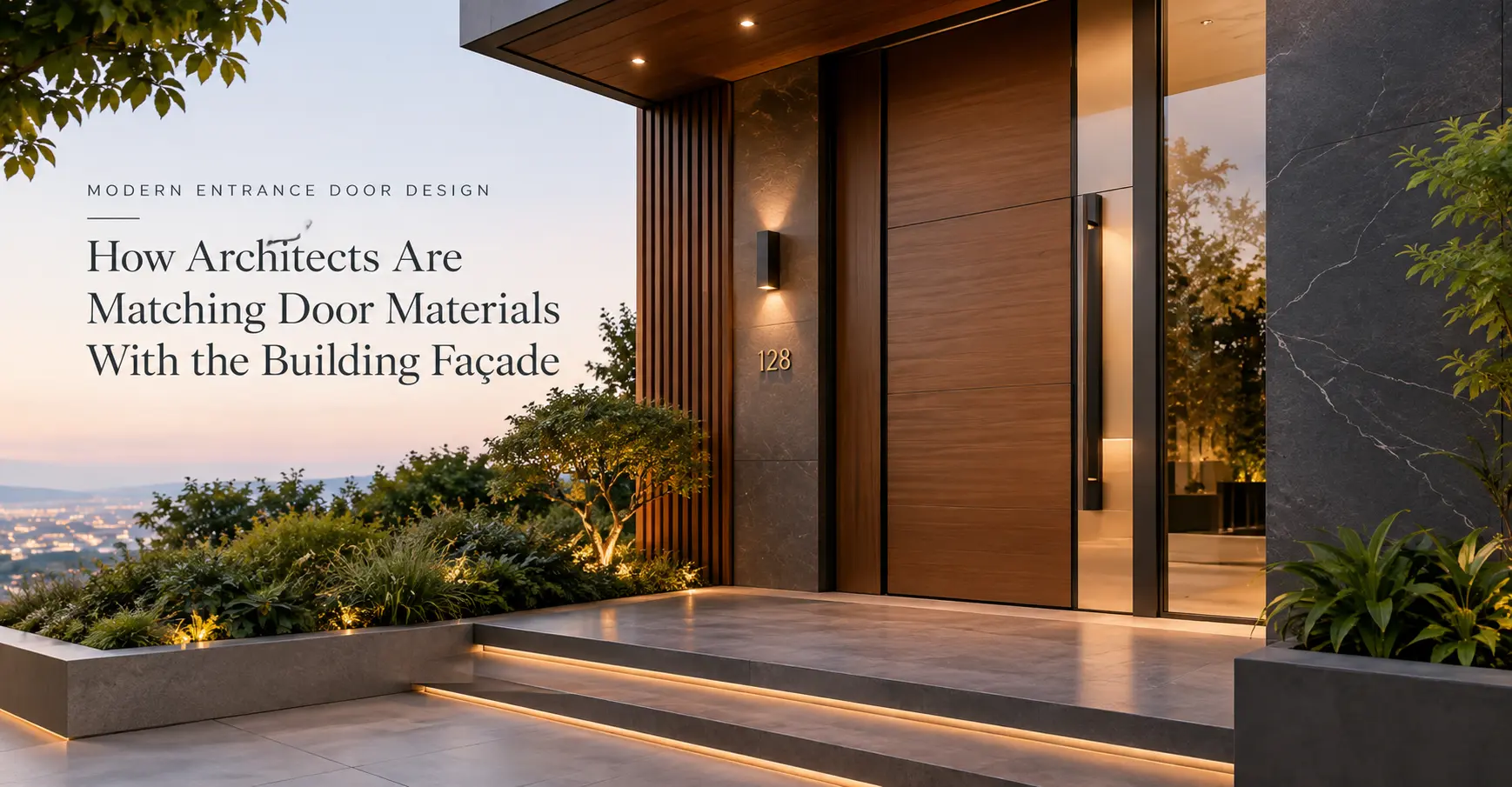
Walk through any newly developed neighbourhood in Delhi NCR right now, and you'll notice something interesting happening at the entrances of these homes. The wooden door with a small glass panel, the design that basically defined Indian homes for decades, is quietly being replaced by something far more deliberate. Architects today are treating the entrance door less like a functional necessity and more like an extension of the building's entire personality. And honestly, it's about time, because for years the front door was treated as an afterthought, something picked out at the very end of a construction project almost as an errand rather than a design decision.
If you've been house hunting, renovating, or just paying attention to the homes coming up around you, you've probably noticed this shift too. So let's talk about what's actually driving this change, and why matching a door's material to a building's façade has become such a serious conversation among architects rather than just a passing trend.
Why the Old Approach to Doors Doesn't Work Anymore
For the longest time, doors were chosen almost independently of everything else happening on a building's exterior. You'd have a façade done in exposed brick or textured stone, and then a door that had absolutely no relationship to either, usually just whatever looked "nice" in the showroom. The result, more often than not, was a home that looked slightly disjointed right at its most important visual point, the entrance.
Think about it for a second. The entrance door is the first thing anyone notices about a building, before the landscaping, before the windows, sometimes even before the overall structure registers. It sets the tone. A door that clashes with the façade, even subtly, creates a kind of visual friction that most people can't quite articulate but definitely feel. Architects have started paying much closer attention to this because clients, especially those investing in high-end homes, are increasingly sensitive to these details. Nobody wants a beautifully designed exterior undone by a door that looks like it was chosen from a completely different building altogether.
Reading the Façade Before Choosing the Door
Good architects now start with the façade material and work backward toward the door, rather than the other way around. If a building uses a lot of natural stone or textured concrete, the entrance door needs to either complement that roughness with something equally tactile, or intentionally contrast it with a smooth, refined material to create a deliberate visual moment. Neither approach is wrong, but the key word is deliberate. It has to be a choice, not an accident.
For façades that lean heavily glass and steel, in that clean, contemporary style so many newer homes in Delhi NCR are going for, doors are now being designed with slim metal frames, minimal ornamentation, and finishes that echo the same industrial, refined feel as the rest of the exterior. A heavily carved wooden door on a glass-and-steel façade sticks out for all the wrong reasons, no matter how beautifully that door might have been carved. Context matters more than the individual piece, and this is really the core principle modern entrance door design is built around.
Material Choices Are Getting More Sophisticated
Traditional wood hasn't disappeared, and it probably never will completely, because there's something about natural wood grain that people are emotionally drawn to. But the way wood is being used has changed considerably. It's often combined with metal accents, glass inserts, or paired with frames that give it a more architectural, less ornamental feel. The heavily carved, deeply traditional wooden door is increasingly reserved for homes that are explicitly going for a classical or heritage aesthetic, where that choice makes complete sense.
For everything else, and this is a growing majority of newer construction, architects are turning toward engineered materials that offer far more consistency, durability, and design flexibility than traditional wood ever could. This is a big part of why materials like Fabrinox have become increasingly relevant in serious architectural conversations, not just for outdoor furniture but for entrance systems too. These kinds of engineered materials allow for cleaner lines, better resistance to Delhi's harsh summers and unpredictable monsoons, and a level of finish consistency that natural wood, with all its lovely unpredictability, simply can't guarantee at scale.
The Rise of Luxury Doors as a Design Statement
There's also been a noticeable shift in how homeowners themselves are thinking about their entrances. A decade ago, spending significant money specifically on the front door would have seemed slightly excessive to most people. Today, especially among homeowners building larger, more design-conscious homes, luxury doors are being treated as a genuine investment, on par with kitchen design or flooring choices.
This shift makes sense when you think about it practically. A door gets touched, seen, and interacted with every single day, by the family living there and every guest who walks through it. Architects have picked up on this and started designing entrance systems that go well beyond a single slab of material. Pivot doors that swing on a central axis rather than traditional hinges, oversized single-panel doors that make a bold architectural statement, combinations of solid material with strategic glass cutouts that let in light while maintaining privacy, all of these have become far more common requests from clients who want their entrance to genuinely reflect the quality of everything else in the home.
Durability Has Become Just as Important as Aesthetics
Here's something that doesn't get talked about enough in these conversations. A stunning entrance door that starts warping, fading, or corroding within a couple of years is ultimately a design failure, no matter how good it looked on day one. Delhi's climate is genuinely tough on exterior materials, with intense summer heat, sudden monsoon downpours, and long stretches of dust and pollution all taking their toll over time.
This is exactly why the material conversation has become so central to modern entrance door design. Architects aren't just asking what looks right anymore, they're asking what will still look right in ten years with minimal maintenance. Engineered and treated materials that resist warping, fading, and corrosion are increasingly preferred over untreated natural materials precisely because they hold their appearance and structural integrity far longer, which matters enormously when you're designing something meant to be the permanent, daily-use focal point of a home's entrance.
Bringing It All Together
The best entrance doors today aren't chosen in isolation. They're the result of a genuine conversation between the façade material, the overall architectural language of the building, the climate the home has to withstand, and increasingly, the durability of the materials being used. Whether it's a heritage-style wooden door on a classical façade or a sleek, minimal pivot door on a contemporary glass structure, the underlying principle stays the same: the door should feel like it belongs to the building, not like it was added on afterward.
For architects and homeowners looking to get this balance right, working with genuinely durable, weather-resistant materials makes all the difference in the long run, and this is precisely the space where Fabrinox has carved out its reputation.
FAQs
1. How should an entrance door match the building façade?
The door should complement the façade’s materials, colours, textures, and overall architectural style for a cohesive appearance.
2. What are popular modern entrance door designs?
Pivot doors, oversized single-panel doors, minimal designs, and doors combining solid materials with glass are popular in modern architecture.
3. Are modern entrance doors durable for Delhi NCR’s climate?
Yes, when made with suitable weather-resistant materials, modern entrance doors can better withstand heat, monsoons, dust, and changing temperatures.
4. Why are engineered materials used for modern entrance doors?
Engineered materials can offer consistent finishes, durability, and resistance to issues such as warping, fading, and corrosion.
5. How important is the entrance door in façade design?
The entrance door is a key visual element that helps establish the character of a building and should be considered as part of the overall façade design.
Latest Blogs