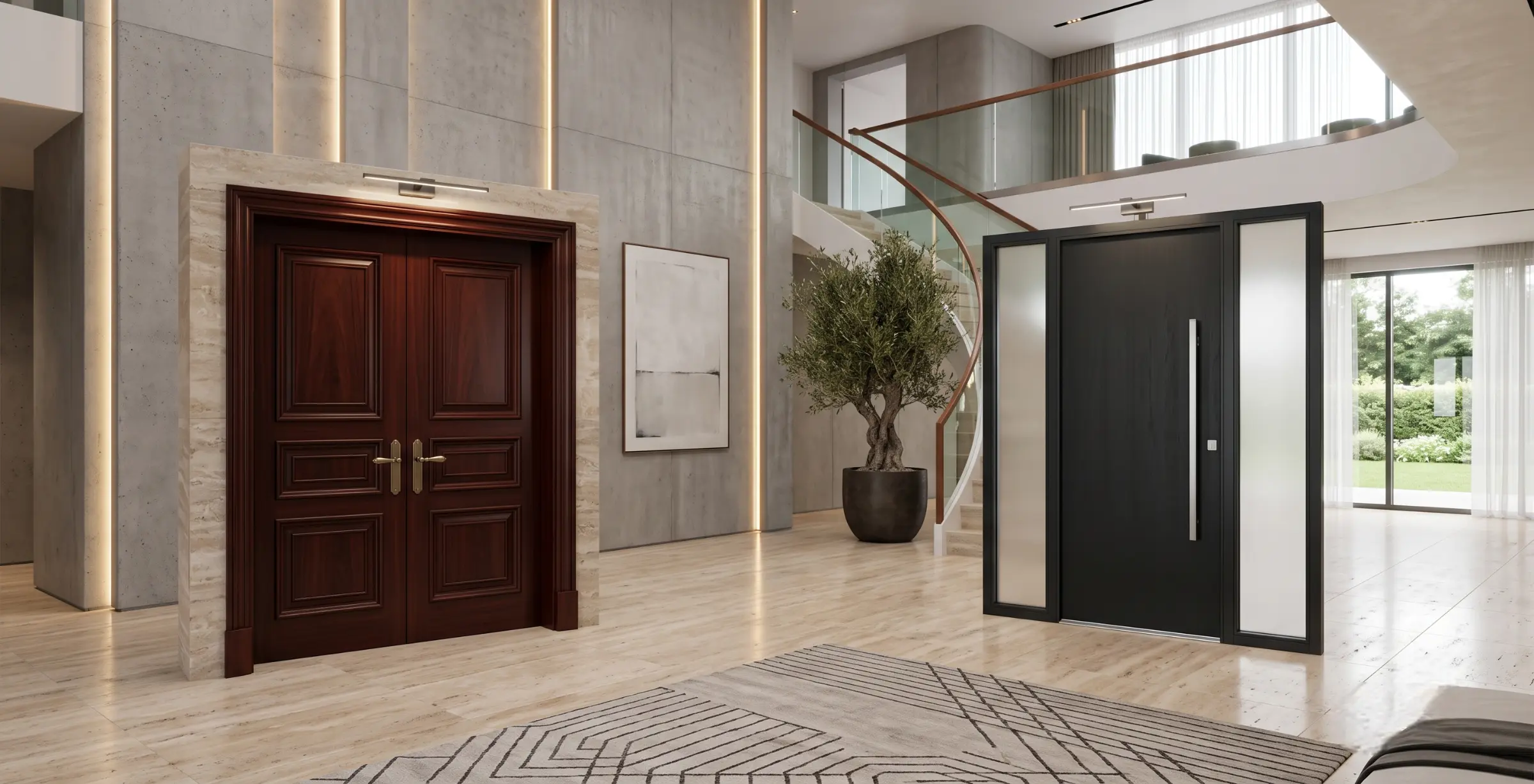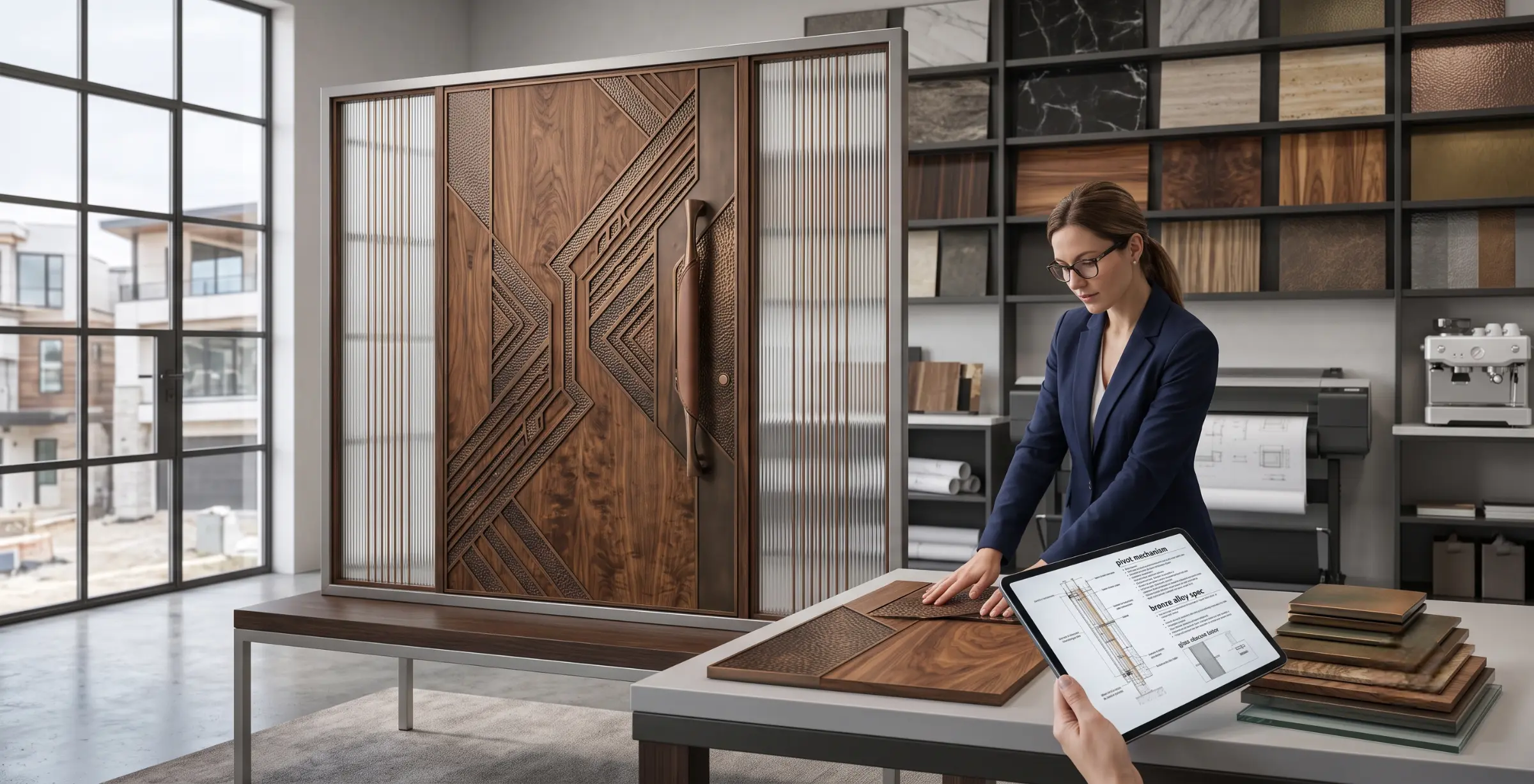
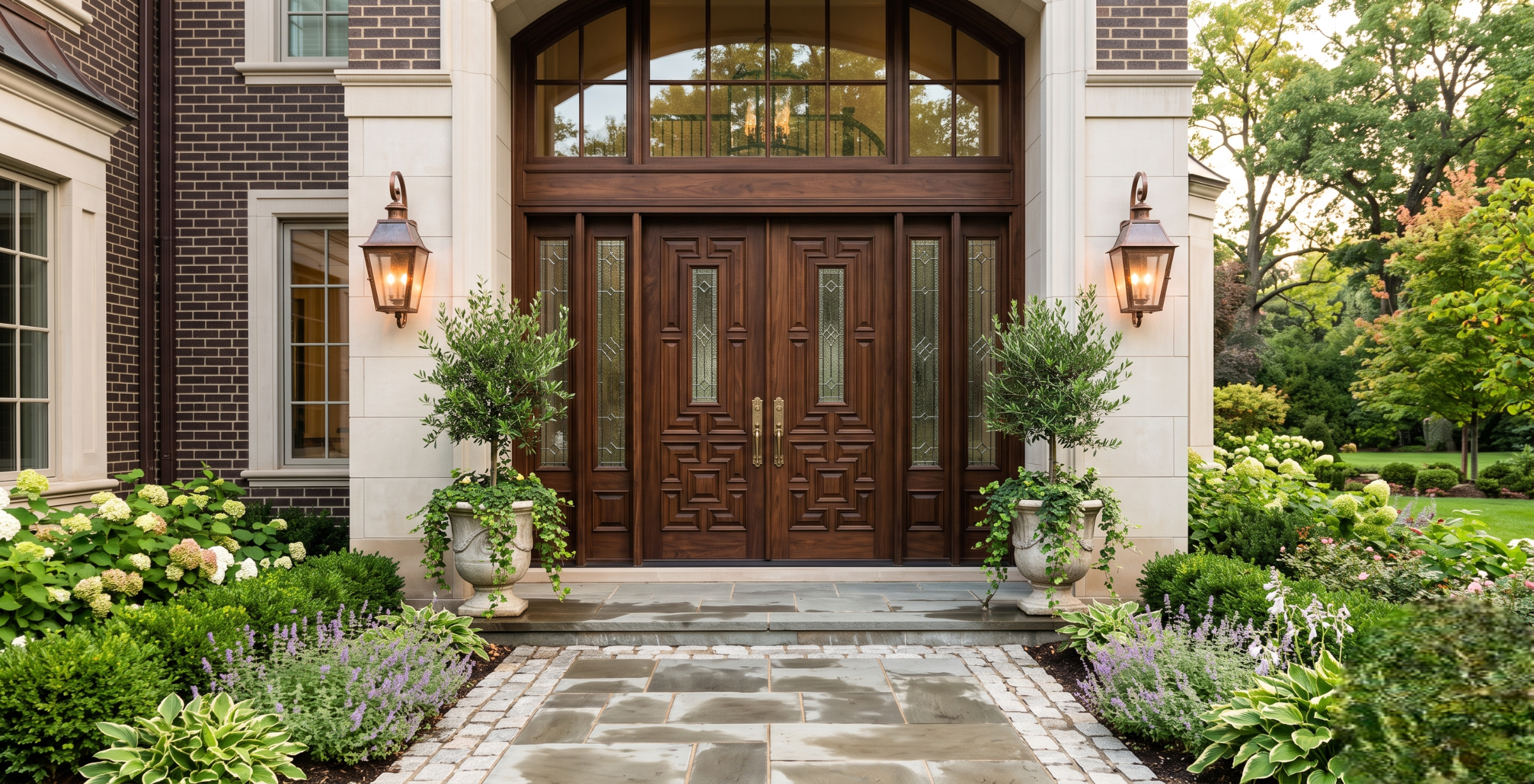
Choosing the right material for your home's entrance is one of those decisions that quietly shapes how your entire house feels — both from the street and the moment someone steps inside. This decision becomes even more important when you're working with a double door front door, since the sheer scale of the opening means the material choice affects everything from structural stability to long-term maintenance to overall visual impact.
Unlike single-panel doors, a double door front door has to balance weight, symmetry, and durability across two coordinated panels. That makes material selection more than just an aesthetic choice — it's an engineering one too. In this blog, we'll compare four of the most popular materials — steel, aluminum, wood, and brass — to help you figure out which one is the right fit for your home.
Why Material Choice Matters More for Double Doors
A double door front door typically spans a wider opening than a standard single door, sometimes reaching six to eight feet in total width. This scale introduces a few unique challenges:
Each panel needs to be structurally sound enough to avoid warping or sagging over time
The two panels need to align perfectly for a clean, symmetrical look
Heavier doors require stronger hinges and frame support
Material expansion and contraction due to weather becomes more noticeable across a larger surface
Because of these factors, the material you choose has a much bigger impact on long-term performance for double doors compared to smaller single-panel entrances. Let's look at how steel, aluminum, wood, and brass each handle these demands.
Steel: Strength-First Security
Steel is often the go-to choice for homeowners who prioritize security above everything else. It's incredibly strong, resistant to forced entry, and holds up well structurally even across the wider spans required for a double door front door.
Pros of steel doors:
Excellent security and impact resistance
Long lifespan with minimal structural issues
Can be powder-coated in almost any finish or color
Relatively low maintenance once properly treated
Cons of steel doors:
Prone to rust if the protective coating is damaged and not repaired
Heavier, requiring robust hinges and professional installation
Can feel less warm or inviting compared to wood or brass finishes
Steel works particularly well for homes in urban areas where security is a top priority, or for contemporary architectural styles that lean into an industrial aesthetic.
Aluminum: Lightweight and Low-Maintenance
Aluminum has become increasingly popular for modern homes, especially for larger openings like a double door front door, because it offers a great strength-to-weight ratio. It's significantly lighter than steel, which reduces stress on hinges and frames over time.
Pros of aluminum doors:
Naturally corrosion-resistant, ideal for humid or coastal climates
Lightweight, making installation and operation easier
Works well with large glass panel integrations for a modern look
Minimal maintenance required
Cons of aluminum doors:
Less structurally rigid than steel, so may need reinforcement for very large doors
Can dent more easily than steel under heavy impact
Tends to look more commercial unless finished thoughtfully
Aluminum is a strong choice among modern front door models, particularly for homes that want to combine large glass sections with a sleek metal frame.
Wood: Timeless but High-Maintenance
Wood remains one of the most popular materials for main double door designs for home projects, largely because of its warmth, natural texture, and ability to be customized with intricate carvings or paneling.
Pros of wood doors:
Classic, warm aesthetic that suits nearly any architectural style
Highly customizable with carvings, panels, and finishes
Good natural insulation properties
Can be refinished and repaired relatively easily
Cons of wood doors:
Prone to warping, swelling, or cracking with humidity and temperature changes
Requires regular maintenance, including resealing or repainting
Heavier hardwoods can be expensive
More vulnerable to pests like termites without proper treatment
For a double door front door made of wood, it's especially important to use well-seasoned, high-quality timber, since poor-quality wood is more likely to develop alignment issues between the two panels over time.
Brass: Luxury with Longevity
Brass has seen a strong resurgence in premium home design, particularly for statement double doors. Unlike the other three materials, brass isn't typically used as the entire structural door — it's often combined with wood or steel as detailing, cladding, or inlay work, though fully brass-clad doors are increasingly common in luxury projects.
Pros of brass doors:
Distinctive, high-end aesthetic that instantly elevates curb appeal
Naturally corrosion-resistant with a beautiful aging patina
Highly durable when properly crafted
Offers strong customization potential for main double door designs for home entrances, including inlay patterns and textured finishes
Cons of brass doors:
Higher upfront cost compared to steel, aluminum, or standard wood
Requires occasional polishing if a bright finish is preferred
Needs skilled craftsmanship to avoid inconsistencies across a large double door surface
For homeowners building a luxury residence or a statement entrance, brass — whether used as full cladding or decorative inlay — offers a level of visual richness that's hard to match with the other three materials.
Comparing Long-Term Value Across Materials
When you weigh these four materials against each other for a double door front door specifically, a few patterns emerge:
For maximum security: Steel is the strongest performer.
For low-maintenance modern homes: Aluminum offers the best balance of durability and ease of care.
For classic warmth and customization: Wood remains unmatched, provided you're willing to maintain it.
For luxury and long-term visual impact: Brass delivers a level of prestige that few other materials can replicate.
There's no single "best" material — it really comes down to your climate, your architectural style, your budget, and how much maintenance you're willing to take on. Many premium front door models today actually combine materials, such as a wooden core with brass detailing, or a steel frame with aluminum-glass panels, to get the benefits of more than one material at once.
Choosing the Right Design for Your Double Doors
Beyond material, the design itself plays a huge role in how your double door front door performs and looks over time. Some popular directions among main double door designs for home entrances include:
Symmetrical paneled doors with matching carvings or metal inlay on both panels
Pivot-style double doors for a more contemporary, minimalist look
Glass-and-metal combinations that bring in natural light while maintaining security
Brass-inlaid wooden doors that combine warmth with luxury detailing
Whichever design direction you choose, working with experienced door hardware specialists ensures your double doors function smoothly and maintain their appearance for years, regardless of the base material.
Why Hardware Quality Matters as Much as Material
It's easy to focus entirely on the door material itself and overlook the hardware that holds everything together — hinges, locks, handles, and finishing details. For a double door front door, hardware quality becomes even more critical, since two panels need to align perfectly and operate smoothly for years without sagging or misalignment.
This is where Fabrinox plays a valuable role. Fabrinox specializes in premium door hardware designed to complement a range of materials, from steel and aluminum to wood and brass. Whether you're finalizing a brass-inlaid double door or a modern aluminum-and-glass entrance, Fabrinox offers finishes and mechanisms built to match the scale and weight demands of larger double door setups.
For homeowners exploring main double door designs for home projects, consulting Fabrinox early in the planning process helps ensure the hardware is matched correctly to the chosen material, avoiding common issues like panel misalignment or premature wear. Their range of finishes also makes it easier to maintain design consistency across some of the more popular front door models available today.
Ultimately, whether you land on steel, aluminum, wood, or brass, pairing your material choice with reliable hardware from a trusted name like Fabrinox ensures your double door front door not only looks impressive on day one but continues to perform beautifully for years to come.
Final Thoughts
There's no universally "best" material for a double door front door; each option brings its own strengths, whether that's the raw strength of steel, the low-maintenance convenience of aluminum, the timeless warmth of wood, or the luxury appeal of brass. The right choice depends on your priorities around security, maintenance, budget, and aesthetics.
What matters most is thoughtful planning — choosing a material and design that suits your climate and architectural style, and pairing it with well-engineered hardware. With the right combination, your double doors can become one of the most striking and functional features of your home for decades to come.